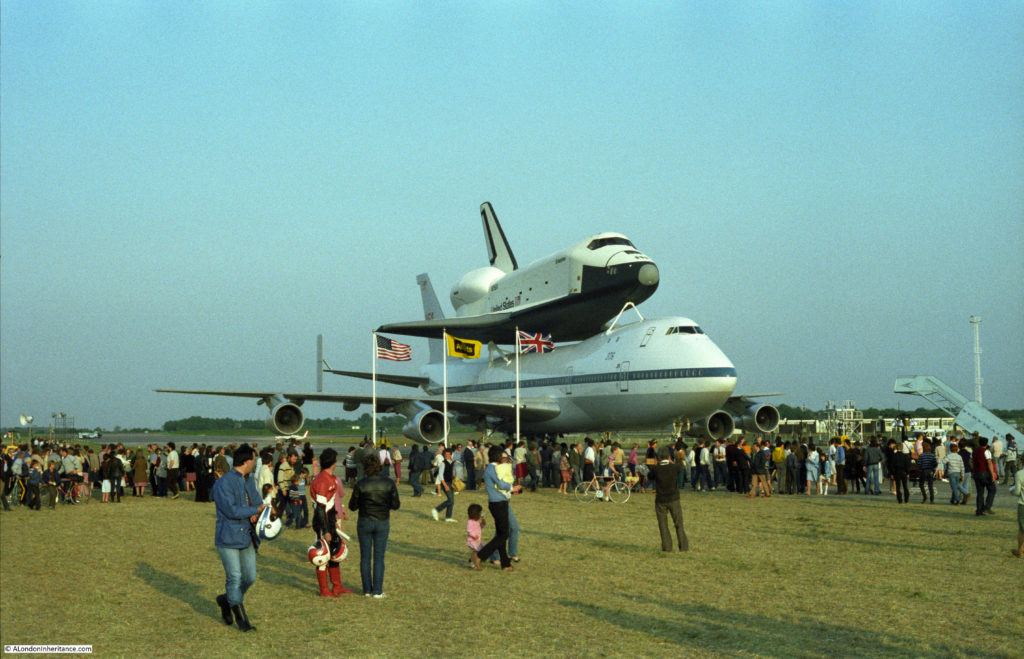
I do not remember the date. I do not remember who first noticed it, or whether I was called to the window, led firstly into the garden, or secondly simply followed the subtle shift in attention that passes almost invisibly through a crowd as I left my house with my Dad, crossed the road, and stood on the banks of the river Thames and being told to ‘look up’. What I remember, if memory is even the right word, is something less precise and more enduring. I remember that the sky felt different.
In 1983 Isleworth, South West London, the sky was rarely empty. Aircraft traced their steady paths toward landing at London Heathrow, their presence so familiar as to be almost invisible (except for the visceral experience of Concorde flying 1,500ft directly overhead twice daily). They belonged to the background of daily life, noticed, perhaps, but not questioned. Yet on one particular day in 1983, that familiarity was disrupted. The sound was heavier, slower, somehow more deliberate. It was not simply another aircraft passing overhead. It was something that demanded attention, even from me, a three-year-old who had no framework through which to understand what he was seeing.
Above me, carried across the West London sky, was the Space Shuttle Enterprise (OV-101), mounted atop a modified Boeing 747 Shuttle Carrier Aircraft, adapted to transport orbiters. It was part of a European tour that would take the prototype orbiter across the Atlantic and into the public imagination of audiences far beyond the United States. For most who witnessed it, this was an extraordinary, and perhaps a once-in-a-lifetime spectacle. For me, it was something else entirely: an encounter before understanding, a moment of awe before knowledge, a fragment of experience that would only later acquire meaning.
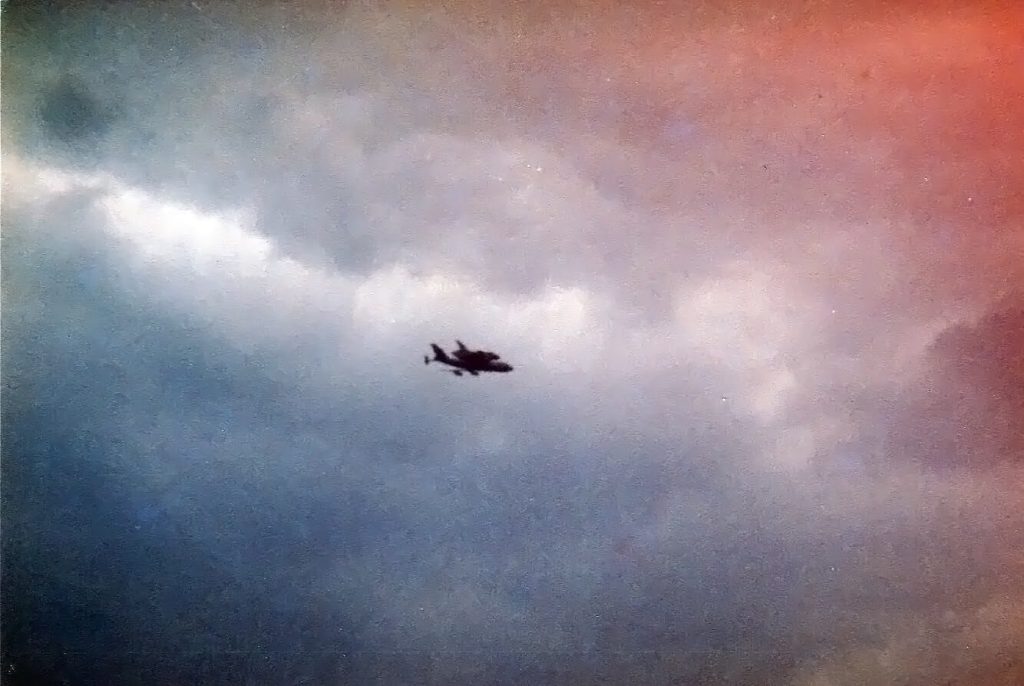
image credit: Peter Davies (Dad)
The 1983 European tour of the Space Shuttle Enterprise functioned not merely as a public demonstration of technological achievement, but as a powerful, cultural and psychological bridge. It collapsed geographic distance between the United States and the United Kingdom, embedded early experiences of wonder within childhood memory, and demonstrated how fleeting encounters with technological spectacle can shape long-term perceptions of science, exploration, and belonging. A single moment; brief, fragmented, and only partially understood could resonate across a lifetime.
To understand the significance of Enterprise’s journey in 1983, it is necessary to situate it within the broader context of the Space Shuttle programme. Emerging in the aftermath of the Apollo missions, the Shuttle represented a conceptual shift in how spaceflight was imagined. Where Apollo’s Saturn V rocket had been defined by its singular use, somewhat overlooked by the programs monumental achievements culminating in the Moon landing, the Shuttle promised something different: the routine access to space. It was designed to be reusable; to launch, orbit, land, and launch again, transforming spaceflight from an exceptional event into an operational system.
In the early 1980s, this vision was still new, still unproven in the long term, and still deeply compelling. The Shuttle looked like the future. Its aerodynamic form, with delta wings and a fuselage reminiscent of an aircraft rather than a traditional rocket, suggested continuity between aviation and spaceflight. It implied that the boundary between Earth and orbit might be crossed not just once, but repeatedly, perhaps even routinely, with NASA rather optimistically aiming for a flight a month.
Enterprise, however, occupied a unique position within this programme. As the first orbiter constructed, it was not intended for spaceflight. Instead, it was built to conduct the Approach and Landing Tests (ALT) in the late 1970s, demonstrating that the Shuttle could glide through the atmosphere and land safely on a runway. Lacking engines and heat shielding, Enterprise never experienced the extremes of launch or re-entry. Yet it was, in many ways, the most visible and recognisable embodiment of the Shuttle concept. It looked complete. It looked real. It looked like a spacecraft.
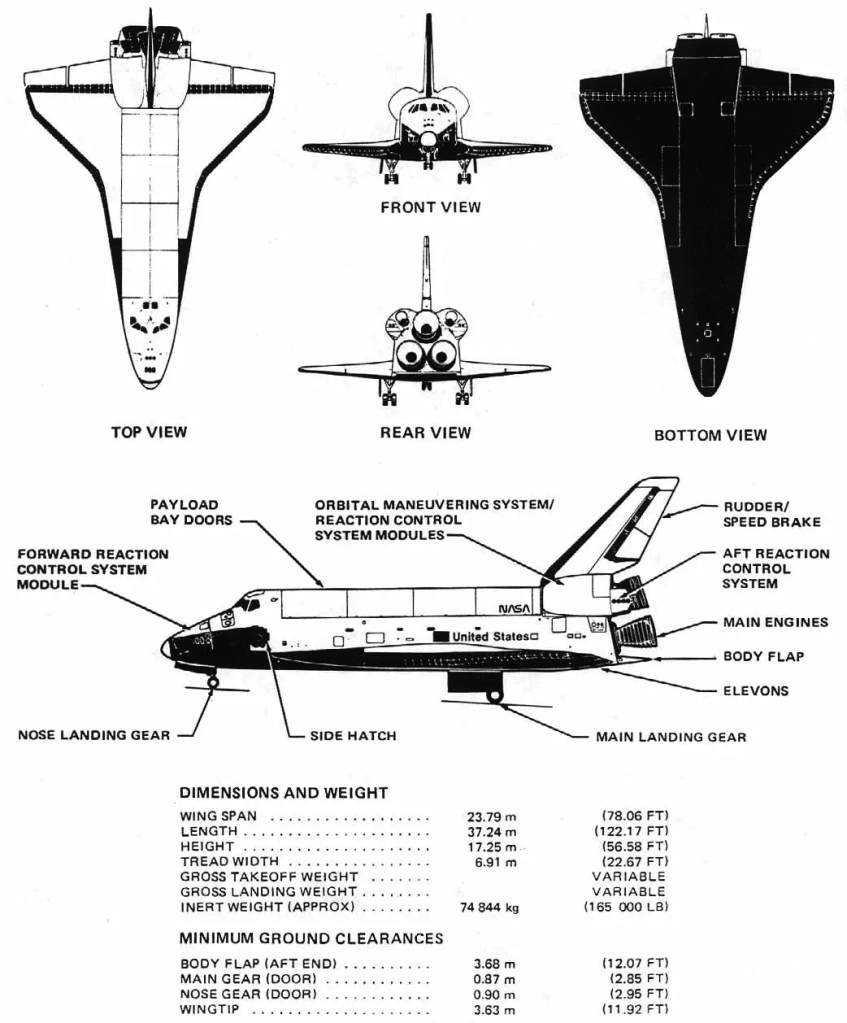
image credit: NASA
By 1983, with operational missions underway using orbiters such as Columbia and Challenger, Enterprise had transitioned from a test vehicle to a symbol. Its European tour was not about testing, data gathering, or experimentation, but about presence. Mounted atop the Shuttle Carrier Aircraft, Enterprise was flown across North America, Canada, Iceland, and into Europe, culminating in its appearance at the Paris Air Show.
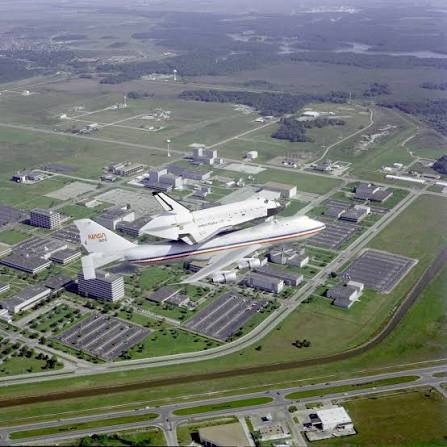
image credit: Paris Air Show
The London flyover was one of the most striking moments of this tour. The Shuttle and its carrier aircraft traced a path along the River Thames, passing landmarks that embodied centuries of history (unfortunately, bad weather forced the cancellation of a Thames flyover). The juxtaposition was profound: a vehicle representing the future of human exploration moving slowly above a city defined by its past. For those watching, it was not merely an aviation display. It was a convergence of timelines, a visual reminder that history and future are not separate, but coexist in the same space.
At three years old, I had no understanding of any of this. I did not know what NASA was. I did not understand the concept of spaceflight, let alone the technological and political complexities that underpinned it. What I experienced instead was something more immediate and more fundamental: a disruption of the ordinary.
Childhood memory operates differently from adult recollection. It is less concerned with sequence and detail, and more attuned to sensation and emotion. What remains is not a clear narrative, but an impression, a sense that something significant occurred, even if its meaning cannot yet be articulated. In this sense, the memory of Enterprise passing overhead was a striking visual image, a feeling, the weight of the sound, the pause in the day, the collective attention directed upward.
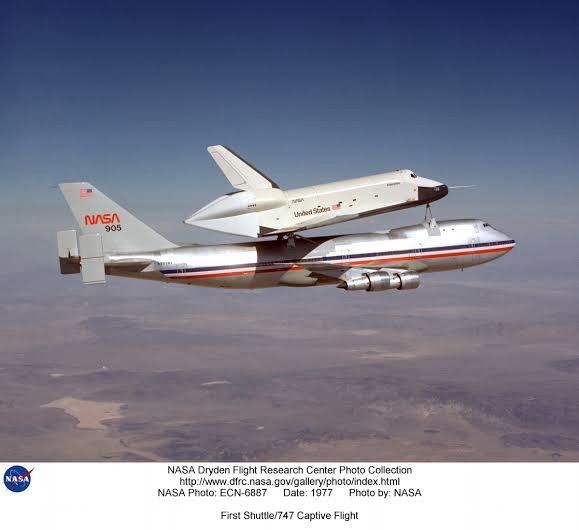
image credit: NASA
This raises an important question: what does it mean to experience something extraordinary without the capacity to understand it? In many ways, this is where awe and wonder originates. Wonder does not require knowledge; indeed, it often precedes it. It is the recognition that something lies beyond the boundaries of the familiar, that the world is larger and more complex than previously assumed.
For a child, such moments can be formative not because they are understood, but because they are felt. They introduce the opportunity of inquiry. They create a space in which curiosity can develop. The sight of a spacecraft, however briefly glimpsed, however imperfectly remembered, suggests that there are things in the world that defy expectation, that challenges assumptions, that invites exploration.
Over time, this initial sense of wonder may attach itself to knowledge. Books, documentaries, museum visits, each provides context, explanation, and detail. But the emotional foundation remains. The feeling of looking up and encountering something unexpected becomes, retrospectively, a point of origin.
It is important, however, not to overstate the clarity of this connection. Memory is not linear, and influence is rarely direct. The experience of seeing Enterprise did not immediately translate into my defined interest in space exploration. Instead, it existed as a fragment, a quiet presence in the background of later experiences. Only in retrospect does it acquire coherence, becoming part of a narrative that links an early sensation to later understanding.
For those of us in the United Kingdom, space exploration has often been experienced at a distance. NASA, as the primary driver of human spaceflight during this period, is geographically and culturally situated in the United States. Its launch sites, its infrastructure, its institutional identity, all belong to a landscape that is not immediately accessible, less so in the 1980s.
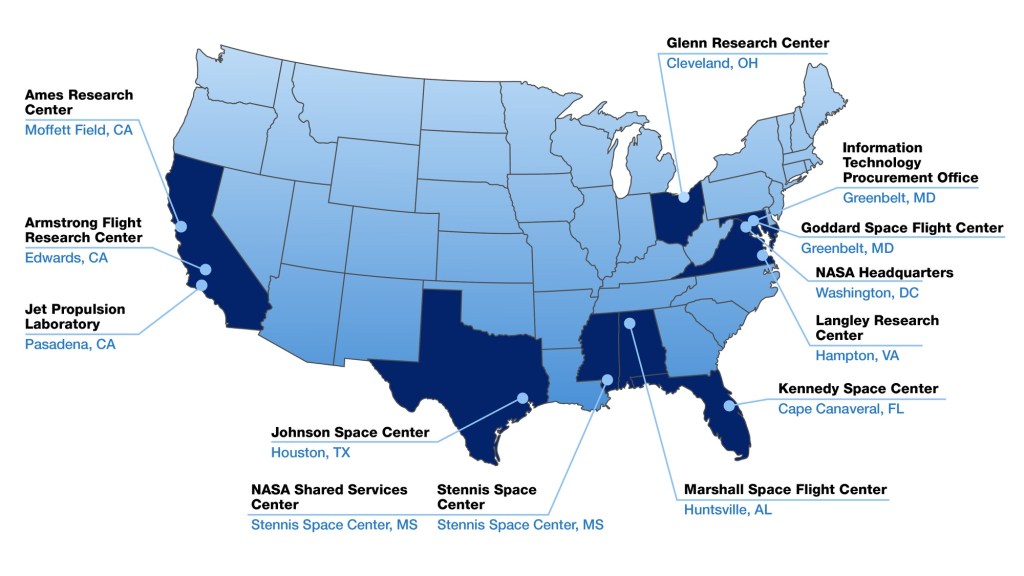
image credit: NASA
This distance shapes perception. Spaceflight becomes something observed rather than participated in, something mediated through television broadcasts, newspaper articles, and second-hand accounts. It is both present and remote, immediate and inaccessible.
The arrival of Enterprise in London disrupted this dynamic. For a brief moment, the distance between observer and object was collapsed. NASA was no longer an abstract entity operating across an ocean; it was physically present, moving through the same sky that formed part of my everyday experience.
This had both symbolic and experiential significance. Symbolically, it demonstrated the global reach of space exploration. It suggested that the achievements of NASA were not confined to national boundaries, but formed part of a broader human endeavour. Experientially, it allowed individuals to encounter a spacecraft directly, to see its scale, its form, its reality.
The collective nature of this experience is also significant. The London flyover attracted large crowds, creating a shared moment of attention and engagement. Such events function as public spectacles, but they also serve as points of connection. They bring together individuals who may have diverse backgrounds and perspectives, uniting them in a moment of shared wonder.
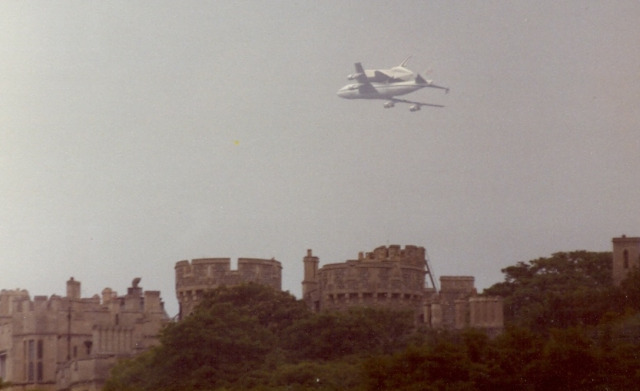
image credit: Chimemark
In this sense, the European tour of Enterprise can be understood as an exercise in soft power. During the Cold War, technological achievement was closely tied to national prestige. By showcasing the Shuttle programme internationally, the United States was not only demonstrating its capabilities, but also shaping perceptions. It was presenting a vision of the future, one defined by innovation, exploration, and possibility.
Yet the impact of such a demonstration extends beyond politics. It operates at the level of individual experience, influencing how people think about science, technology, and their place within a global narrative of exploration.
One of the most striking aspects of Enterprise’s 1983 tour is the fact that it never went to space. Unlike its operational counterparts, it did not carry astronauts into orbit or deploy satellites. Its significance lies not in what it did, but in what it represented.
This highlights the symbolic power of technological artefacts. Objects such as Enterprise function not only as tools, but as carriers of meaning. They embody ideas, aspirations, and narratives. They make abstract concepts tangible, allowing individuals to engage with them directly.
The image of Enterprise mounted atop a Boeing 747 is particularly rich in symbolism. It is, in many ways, a paradox. A spacecraft, designed to leave the Earth, is instead being transported within the atmosphere. It is both a vehicle of transcendence and an object of display.
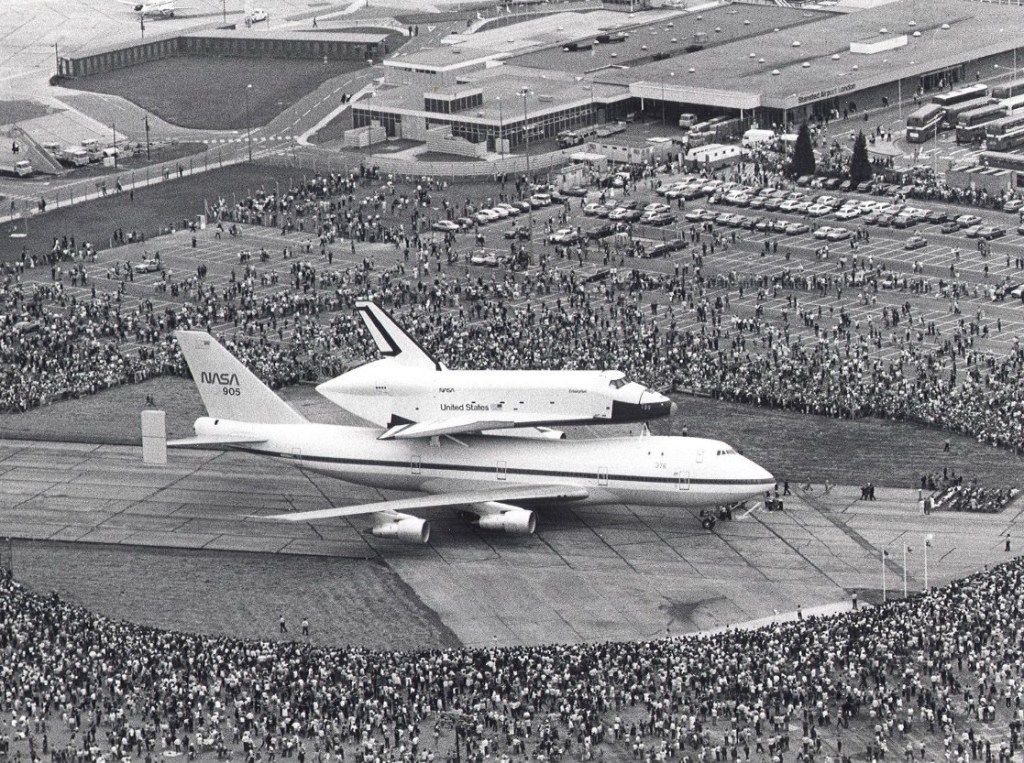
image credit: Stansted Airport
This paradox only enhances its impact. By bringing the spacecraft into the realm of everyday experience, it makes the extraordinary accessible. It allows individuals to see, quite literally, what a spacecraft looks like. It transforms spaceflight from an abstract idea into a physical reality.
At the same time, the configuration of Shuttle and carrier aircraft suggests continuity between different modes of flight. It connects the familiar (the commercial airliner) with the unfamiliar (the spacecraft), creating a visual bridge between the known and the unknown.
For a child observing this from the ground, for me, the effect was profound. The presence of the 747 provides a point of reference, something recognisable, especially growing up directly under the Heathrow flightpath. The Shuttle, perched above it, extends that reference into something new. Together, they form an image that is both comprehensible and mysterious, inviting further curiosity.
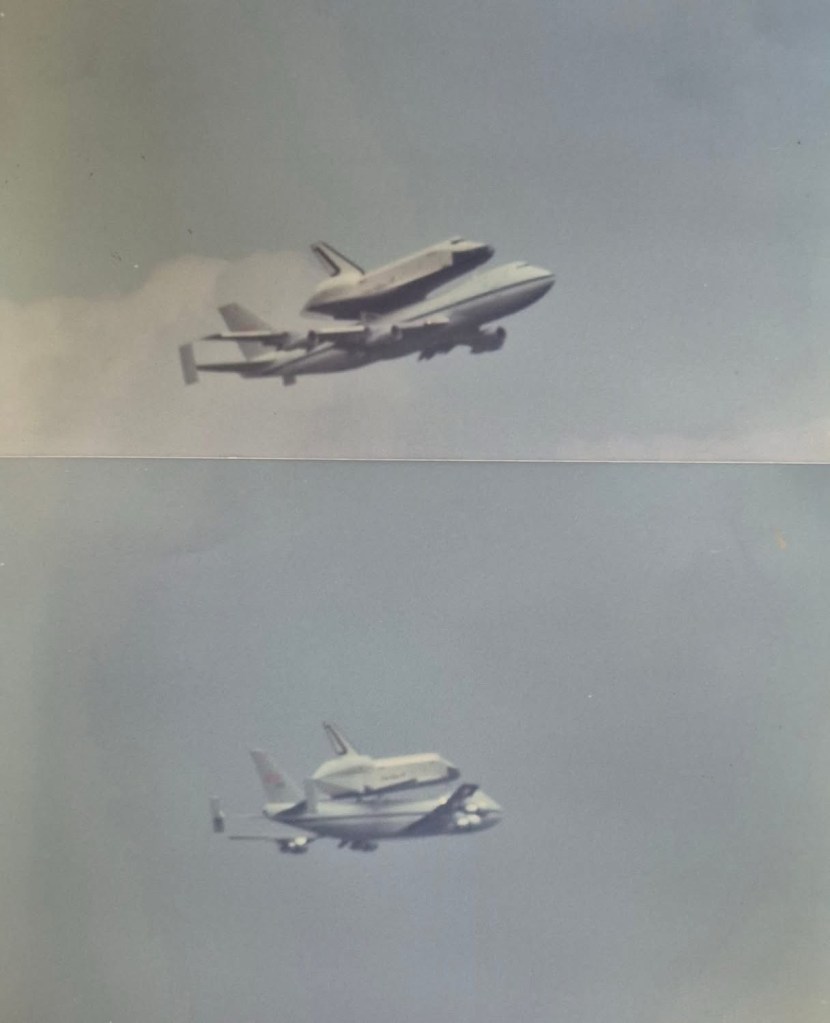
image credit: Chris Bartley
The initial encounter with Enterprise was not, in itself, a fully formed moment of understanding. It was an impression, a disruption of the ordinary. Its significance was not immediately apparent. However, as subsequent experiences accumulated, learning about space, space exploration, meeting astronauts, witnessing a launch, encountering representations of spacecraft, visiting sites associated with space exploration, the memory gained context.
The central question that emerges from this analysis is how a fleeting, partially remembered experience can exert a lasting influence. The answer lies in the interplay between memory, emotion, and narrative.
This process of reinterpretation is crucial. Memory is not static; it evolves over time, shaped by new information and perspectives. The fragment of experience from 1983 becomes integrated into a broader narrative, one that links personal history with wider cultural and technological developments.
In this sense, the influence of Enterprise is not direct but mediated. It does not determine a specific path, but contributes to a framework within which later experiences are understood. It provides an early point of reference, a jumping-off point, a foundation of sorts, a moment against which other moments can be compared.
There is also an important emotional dimension. The feeling of wonder associated with the original experience persists, even as its context changes. This continuity of feeling creates a bridge between past and present, allowing the adult observer to reconnect with the perspective of the child.
When I’m standing, years later, at a site such as Kennedy Space Center, this connection becomes particularly apparent. The physical environment is different, the level of understanding is far greater, but the underlying sense of awe remains. The memory of Enterprise passing overhead becomes part of this experience, linking two moments separated by time and space.
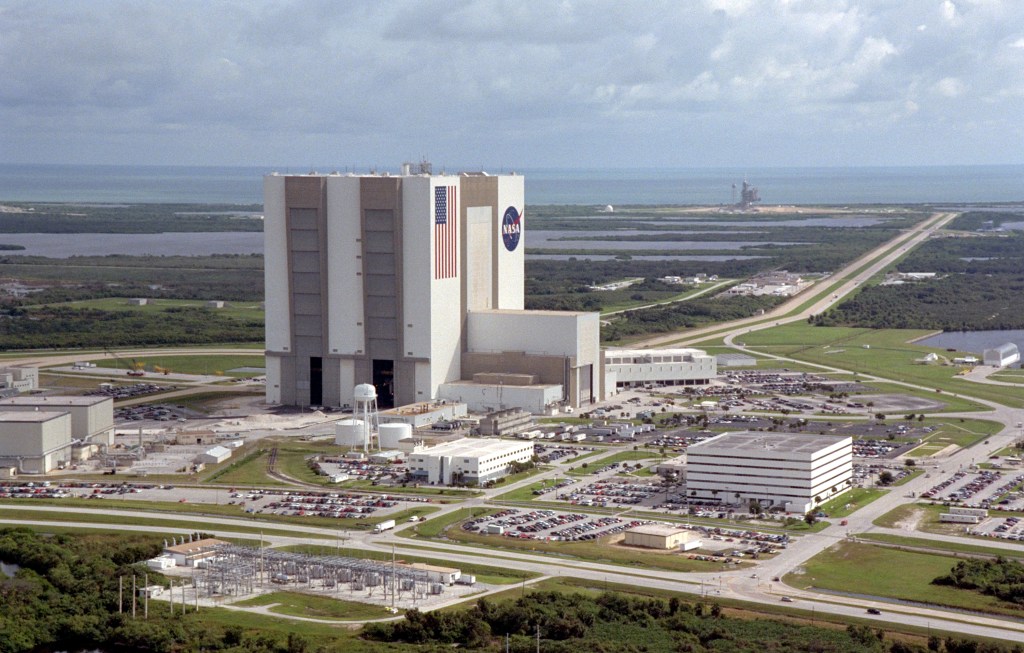
image credit: NASA
This suggests that the impact of technological spectacle extends beyond immediate engagement. It contributes to the formation of identity, shaping how individuals relate to concepts such as exploration, discovery, and possibility.
The 1983 European tour of Space Shuttle Enterprise was, on the surface, a temporary event, a series of flyovers and public displays designed to showcase a new era of spaceflight. Its physical presence in the skies above London lasted only minutes. Its broader tour spanned only weeks.
And yet, its impact endures.
For those who witnessed it, it represented a moment when the future became visible, when the distant became immediate, when the extraordinary intersected with the everyday. For a three-year-old in Isleworth, it was something even more fundamental: an encounter with wonder before understanding, a fragment of experience that would only later acquire meaning.
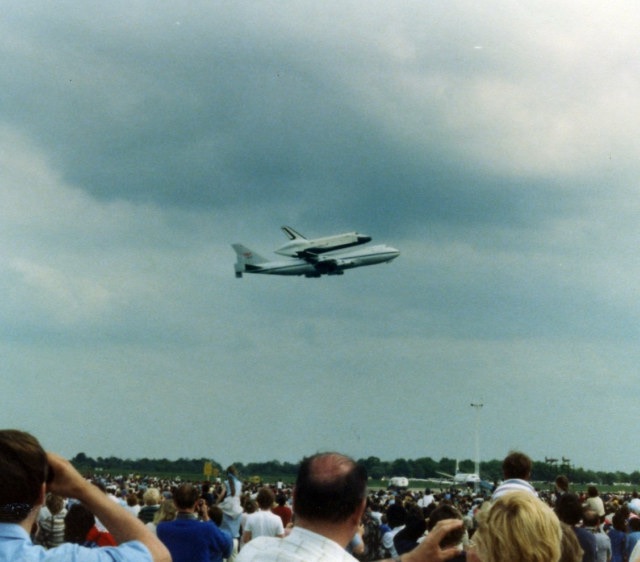
image credit: Stuart Axe
Such moments function as bridges, between places, between ideas, between stages of life. The journey of Enterprise demonstrated the power of technological artefacts to inspire, to connect, and to shape perception.
Perhaps most importantly, it highlights the role of memory in this process. The significance of the event lies not only in what happened, but in how it is remembered, reinterpreted, and integrated into a broader narrative. The fleeting image of a spacecraft carried across the sky becomes, over time, a point of origin, a quiet reminder that the boundaries of the possible are not fixed.
In the end, the legacy of Enterprise’s journey is not confined to its historical context. It persists in the experiences it helped to shape, in the curiosity it helped to spark, and in the enduring sense that sometimes, the path to understanding begins with a simple act: looking up, and noticing that the sky has changed, and that I had with it.
Thanks Dad, for ensuring I looked up, on that day in 1983.
Title image credit: A London Inheritance
 THE ROGUE ASTRONAUT