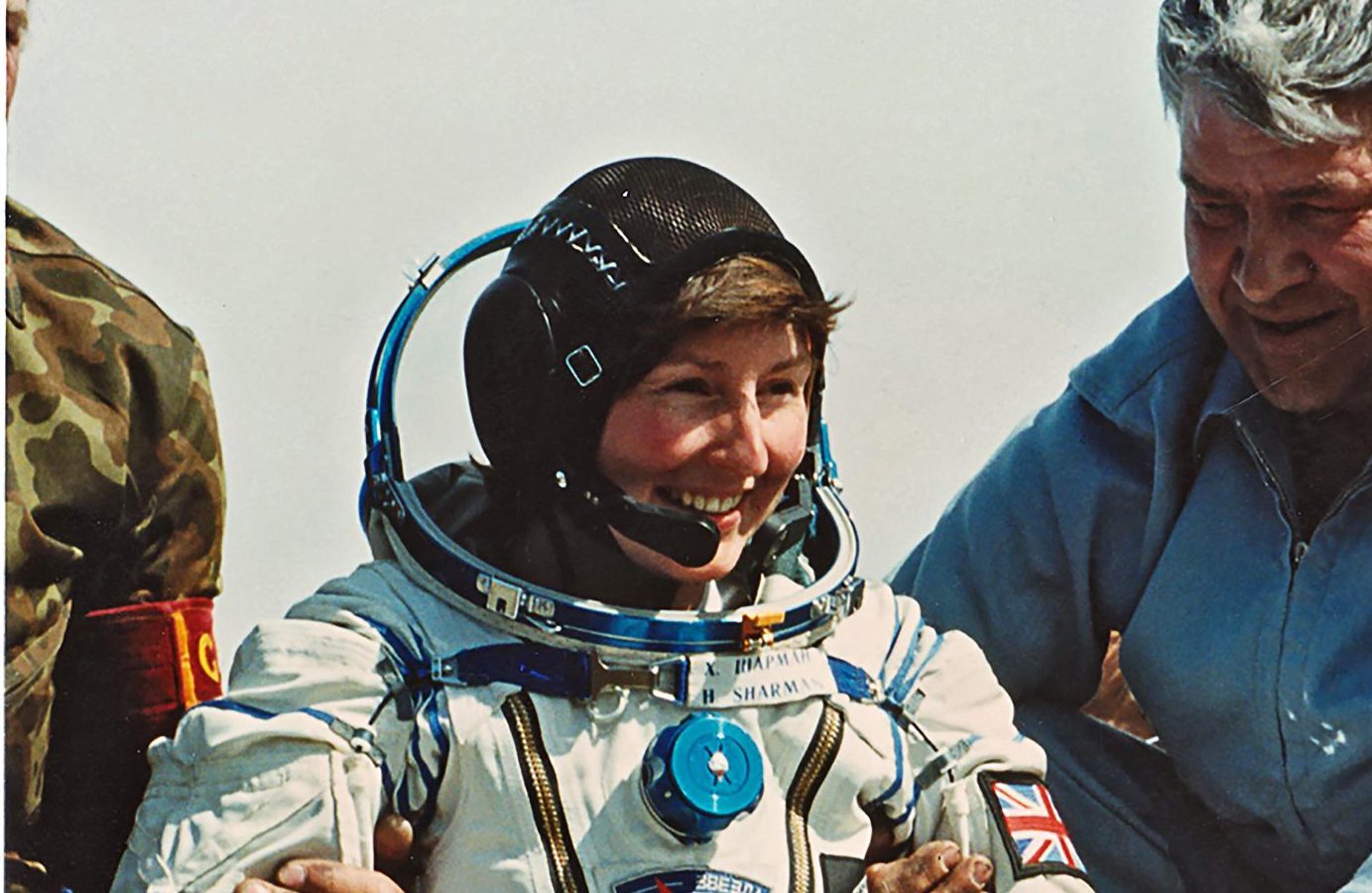
There are moments when inspiration does not arrive as a sudden revelation, but as something quieter, more measured, more enduring. It does not demand attention in the way spectacle does, nor does it announce itself with the force of a defining event. Instead, it settles gradually, taking shape through listening, reflection, and the presence of someone who has seen the world from a perspective few others ever will.
On Sunday April 12th, 2026, I attended a lecture at the Usher Hall, the headline event of the Edinburgh Science Festival given by Helen Sharman, the United Kingdom’s first astronaut. The date itself carried quiet significance, marking the anniversary of Yuri Gagarin’s first journey into space in 1961, a moment that fundamentally altered humanity’s relationship with the Earth, but also the first launch of the Space Shuttle (STS-01 Columbia) in 1991, a moment that signalled a new era of human spaceflight. Yet the lecture was not framed as a celebration of milestones alone. It was something more reflective, more human in its focus.
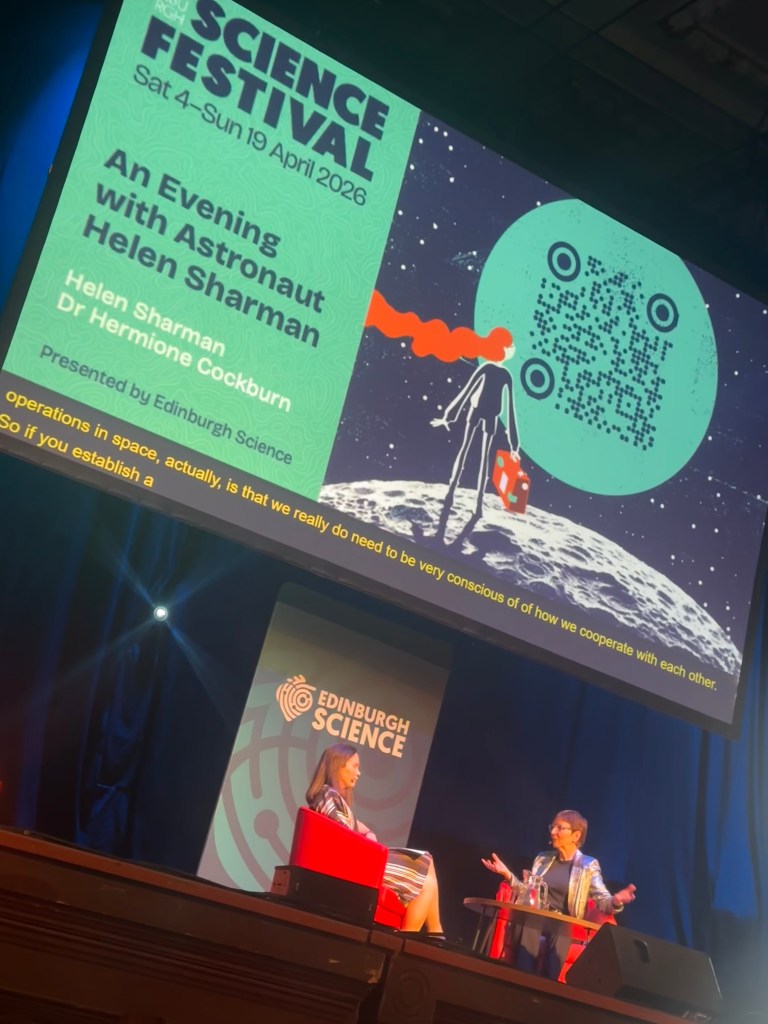
image credit: The Rogue Astronaut
From the offset, Sharman acknowledged the recent Artemis 2 mission, and spoke not only of her journey to the Soviet space station Mir in 1991, but what remained afterward. Of how that experience continues to shape her thinking, her work, and her understanding of the world. She spoke of collaboration, of the shared effort required to conduct scientific research in space. She spoke of perspective, of looking down at the Earth and thinking not of borders or possessions, but of people. She spoke of hope, not as an abstract ideal, but as something grounded in cooperation and collective endeavour. That space exploration is not defined solely by technological achievement, but by its capacity to transform how we understand ourselves, one another, and the fragile world we share.
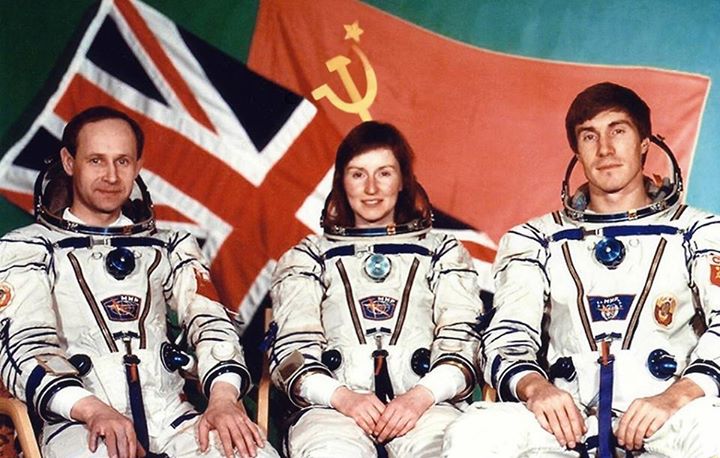
image credit: AMSAT – Commander Anatoly Artsebarsky (left) and Flight Engineer Sergei Krikalev (right)
In May 1991, Helen Sharman became the first British astronaut, launching aboard Soyuz TM-12 to the Soviet space station Mir. Her selection was the result of Project Juno, a privately funded initiative that sought to send a UK citizen into space, when the then UK government under John Major had a detached attitude to space activity, (Her Project Juno flight was backed by a consortium of private sponsors who were keen to see a Briton in orbit. The consortium failed to raise the required funding but the mission went ahead on the orders of Soviet premier Mikhail Gorbachev.).
Unlike many of her predecessors, Sharman was not a test pilot or military officer, but a chemist. Her background, developing the popular chocolate ‘Mars Bar’ and its subsequent Ice Cream treat, reflected a broader shift in the purpose of human spaceflight. It developed to International collaboration between the Soviet Union and the United Kingdom, and shifted from exploration toward scientific research conducted in orbit.
Her mission took place at a pivotal moment in history. The Cold War, which had defined much of the early space race, was nearing its end. Political structures were shifting, and the Soviet Union itself would soon dissolve. Yet amid this uncertainty, the infrastructure and culture of space exploration persisted, grounded in a shared commitment to scientific advancement.
The Mir space station represented a significant evolution in orbital habitation. Designed for long-duration missions, it allowed astronauts and cosmonauts to live and work in space for extended periods, conducting experiments across a range of scientific disciplines. It was a precursor to the International Space Station, establishing many of the practices and collaborative frameworks that continue today (2026).
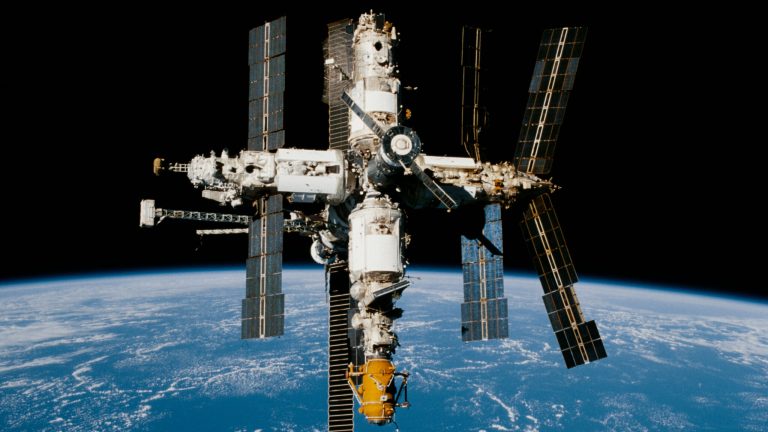
image credit: Space.com
Sharman’s role on Mir involved conducting experiments in microgravity, contributing to research that could not be replicated on Earth. Yet as she made clear in her lecture, the technical aspects of the mission are only part of its significance. What endures most powerfully is the perspective gained from living beyond the Earth’s surface. One of the most compelling elements of Sharman’s lecture was the her description of looking back at the Earth from orbit. It is an experience often described by astronauts, yet each account carries its own nuance shaped by individual perception. What stood out was not a focus on geography or the visual grandeur of the planet, but a shift in what mattered. From space, the Earth is not experienced as a collection of nations, territories, or systems of ownership. The distinctions that structure life on the ground, borders, infrastructure, divisions, are not visible in the same way. Instead, what emerges is a sense of unity, of shared existence.
Sharman spoke of thinking about people, friends and family. This perspective reframed the way her Earth was understood. It moves attention away from material concerns and toward human connection. It emphasises the fragility of the environment that sustains life, and the interdependence of those who inhabit it. The significance of this shift lies not only in its philosophical implications, but in its potential to influence behaviour. When the Earth is viewed as a shared system rather than a collection of separate entities, the need for cooperation becomes more apparent. Challenges such as climate change, environmental degradation, and resource management cannot be addressed in isolation. They require collective action, informed by a recognition of interconnectedness.
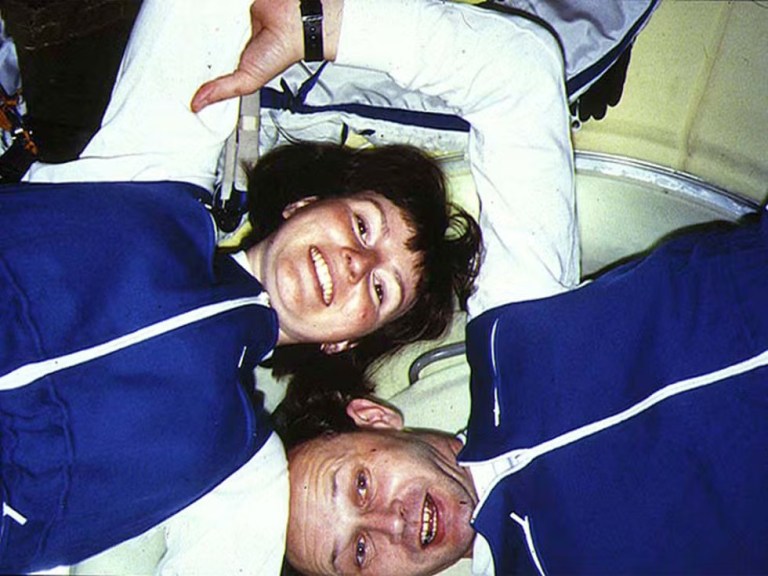
image credit: The Times
For those few who have experienced this perspective directly, it often becomes a lasting influence. For those who have not, it must be conveyed through words, images, and shared accounts. Yet even second-hand, it carries weight. It invites reflection, encouraging a reconsideration of priorities and assumptions.
A central theme of Sharman’s lecture was collaboration. Her mission to Mir was itself a product of international cooperation, bringing together expertise, resources, and personnel from different countries. This collaborative approach has since become a defining feature of human spaceflight. On the International Space Station, astronauts and cosmonauts from multiple nations live and work together in a shared environment.
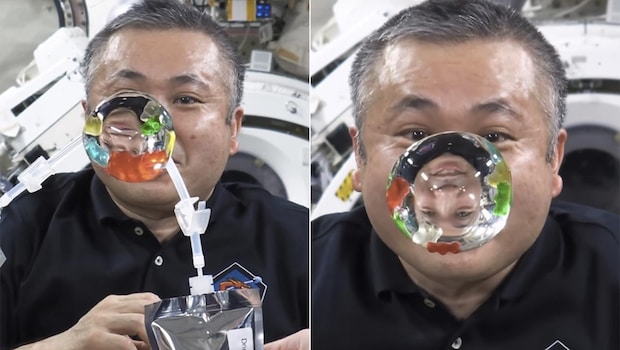
image credit: Instagram ISS – astronaut Koichi Wakata
The station functions as a laboratory, a research facility, and a symbol of what can be achieved through sustained cooperation. Scientific experiments conducted in orbit contribute to advancements in medicine, materials science, and environmental research, with benefits that extend far beyond space.
Helen then gave three specific examples of scientific experiments, and their ‘conducted in orbit’ reasoning:
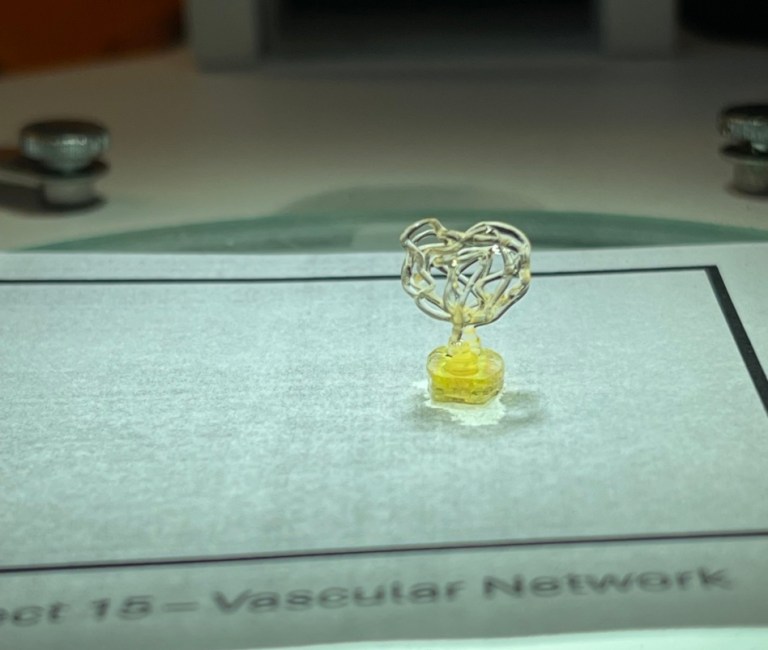
image credit: Payloadspace
Firstly, she showed us a delicate structure of the vascular network, an example of 3D bioprinting of tissue scaffolds in microgravity, that represents something that could only truly exist beyond the pull of Earth’s gravity. In this case, a fine, branching model of human blood vessels is printed layer by layer, forming a complex biological framework intended to support future tissue growth. On Earth, such a structure would collapse under its own weight before it could fully form, its fragile geometry unable to withstand gravity. But in orbit, freed from that constraint, it holds its shape, an intricate scaffold, almost organic in appearance, hinting at future possibilities in regenerative medicine.
It is a quiet demonstration of how space does not simply extend our reach outward, but allows us to rethink what is possible within. What appears fragile is, in fact, a triumph of environment, a reminder that gravity, so constant and invisible in our daily lives, is also a limitation we are only beginning to understand by stepping beyond it.
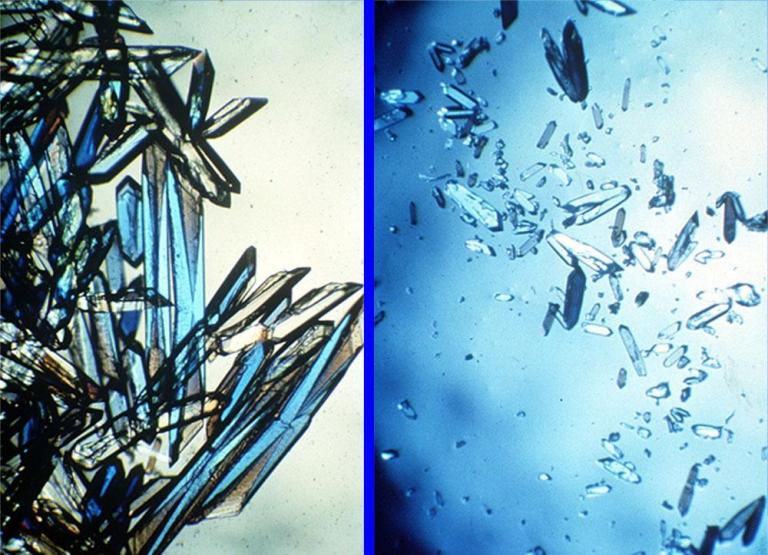
image credit: issnationallab
Secondly, Sherman displayed these crystalline formations, suspended like fragments of glass caught in time, are the result of protein crystallisation experiments conducted in microgravity. These experiments focus on growing highly ordered crystals of biological molecules, often proteins involved in disease, to better understand their structure. On Earth, the process is disrupted by convection currents and sedimentation, introducing imperfections that limit clarity. In microgravity, however, these disturbances fall away. The crystals grow more slowly and more uniformly, forming with a precision that is otherwise unattainable. Within these structures lies knowledge, about how proteins fold, how diseases develop, and how targeted medicines might be designed. They are not merely scientific samples, but windows into the molecular architecture of life itself.
To look at them is to see not just their form, but their potential: the possibility that solutions to complex biological challenges may emerge from environments far removed from the conditions in which those challenges exist.
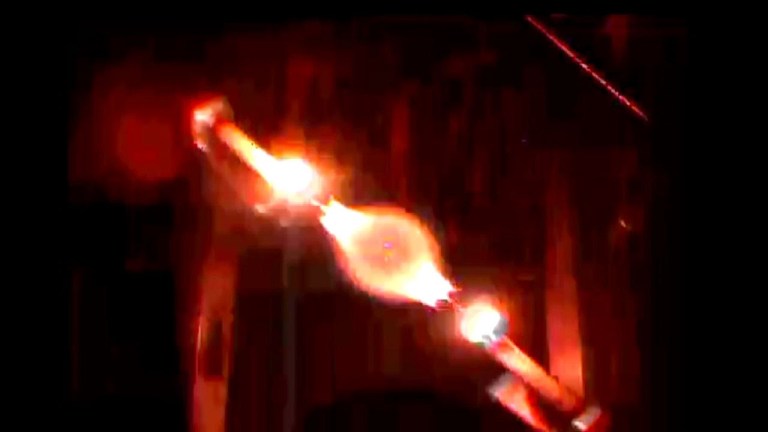
image credit: NASA
Thirdly, fire, so familiar and yet so unpredictable on Earth, becomes something entirely different in space. These images capture controlled combustion experiments conducted aboard the International Space Station, where scientists deliberately ignite small, contained flames to study how fire behaves in microgravity. Without gravity to drive hot air upward, flames do not flicker or stretch, they form rounded, almost spherical shapes, burning more slowly and more steadily, sustained by diffusion rather than convection. These experiments are carefully designed, yet they carry profound importance. Understanding combustion in microgravity is essential for the safety of astronauts, but it also offers insights that extend far beyond spaceflight, informing more efficient fuel use, cleaner combustion technologies, and improved fire safety on Earth.
In the stillness of orbit, even fire becomes something unfamiliar again, its behaviour reshaped by the absence of weight, inviting us to reconsider something we thought we already understood.
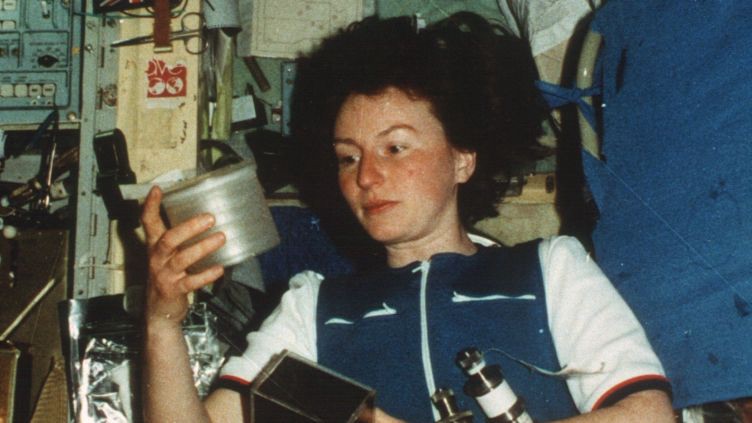
image credit: University of Sheffield
Sharman then went on to discuss the advancement of growing and subsequently eating plants in space, and how it seems to bring a small piece of Earth into orbit. In microgravity, roots no longer grow downward, but instead find their way through carefully designed systems that guide water and nutrients.
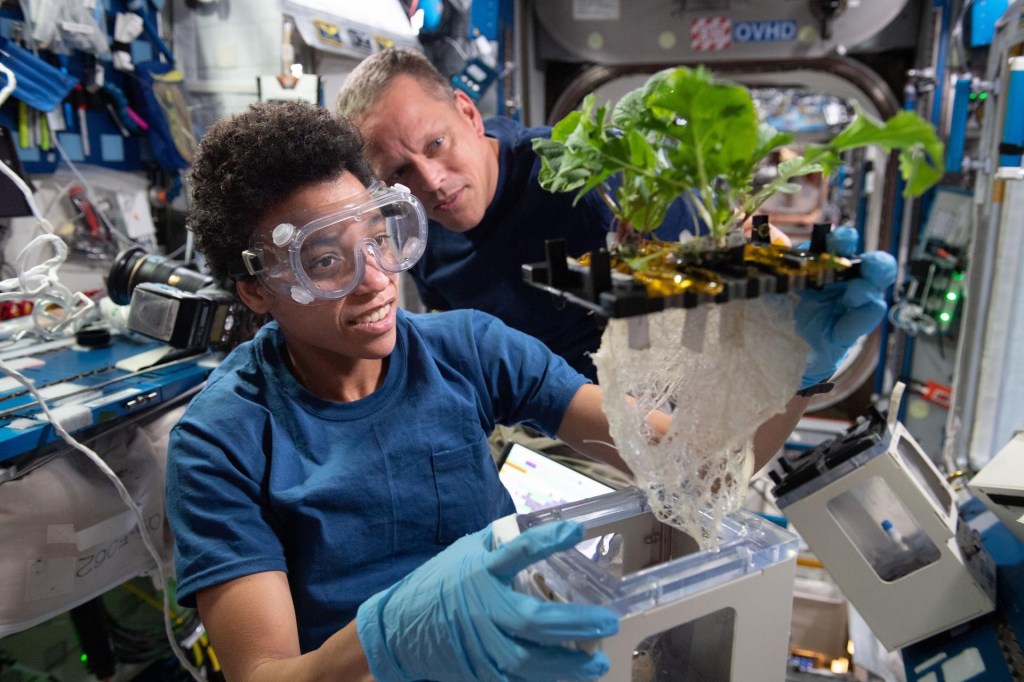
image credit: NASA – Astronauts Jessica Watkins and Bob Hines work on the XROOTS investigation.
Astronauts nurture these plants not just as an experiment, but as a source of fresh food and connection. To harvest and eat something grown in space is both practical and symbolic, a step toward sustaining life beyond Earth, and a reminder that even in the most distant environments, growth remains possible.
Sharman emphasised that such collaboration is not merely logistical, but deeply human. It requires trust, communication, and a willingness to work across cultural and linguistic differences. It involves recognising the value of diverse perspectives and integrating them into a cohesive effort. She also connected these experiences to current and future initiatives, including the Artemis programme and the planned return of humans to the Moon. These missions continue to build on the principles established in earlier programmes, expanding the scope of international partnership.
The significance of this model extends beyond space exploration. It offers a framework for addressing challenges on Earth, demonstrating that complex, large-scale problems can be approached through cooperation rather than competition. It suggests that the lessons learned in orbit have relevance in a wide range of contexts, from scientific research to global governance.
What emerged just as strongly as the science and Sharman’s experience of spaceflight, was a quieter, more complex conversation about the future, one shaped not only by exploration, but by collaboration and responsibility. Helen spoke of a changing landscape in spaceflight, where questions of ownership and access are no longer theoretical. The idea of a “land grab” on the Moon, particularly through emerging policies and defined operational perimeters, introduces tensions between national ambition and collective stewardship. At the same time, she emphasised that space has always progressed most meaningfully through cooperation, not competition, from Mir to the International Space Station, and now toward the multinational ambitions of lunar return. With multiple space stations planned in the coming decade, led by both governments and private organisations, the orbital environment itself is becoming more complex, more populated, and more contested. Yet within this expansion Helen offered us a choice to think about: Whether space becomes an extension of terrestrial division? Or a continuation of the collaborative spirit that has defined its most successful achievements.
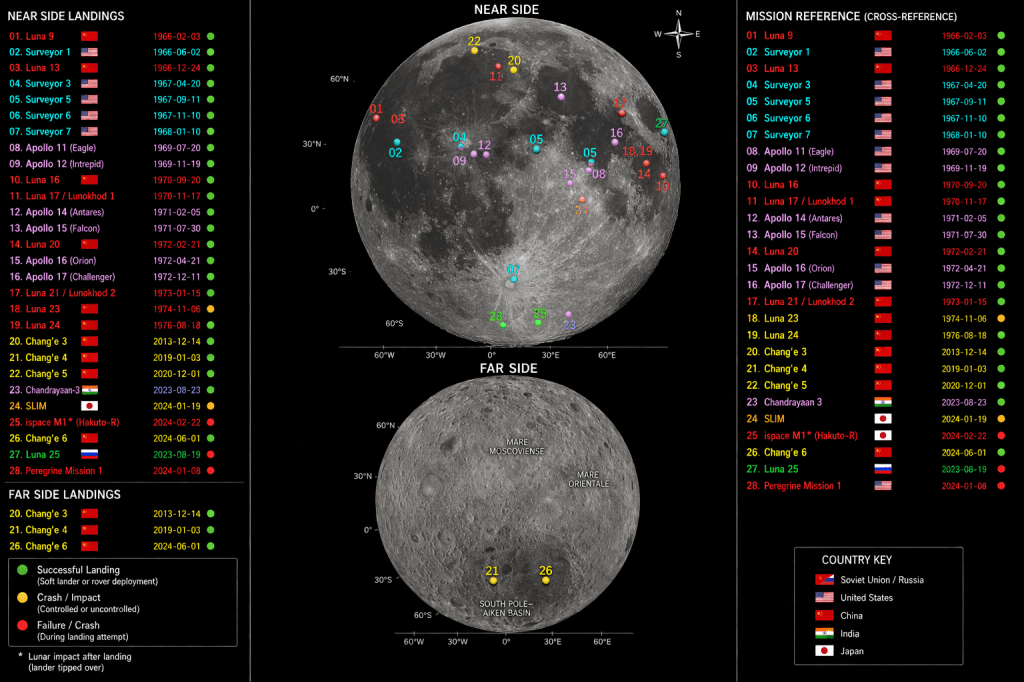
image credit: the rogue astronaut
There is a particular quality to hearing an astronaut speak in person. It is not simply the content of what is said, but the presence of someone who has experienced what they describe. The distance between listener and subject narrows. Spaceflight, often perceived as remote and abstract, becomes immediate and tangible. In listening to Sharman, there was a sense of continuity, of connecting with a broader narrative of human exploration through individual experience. Her account was not presented as something extraordinary in isolation, but as part of an ongoing process of discovery and collaboration. What emerges from such encounters is not a single moment of inspiration, but a layering of understanding. Each story, each perspective, contributes to a broader sense of what space exploration represents. It becomes less about individual missions and more about collective endeavour.
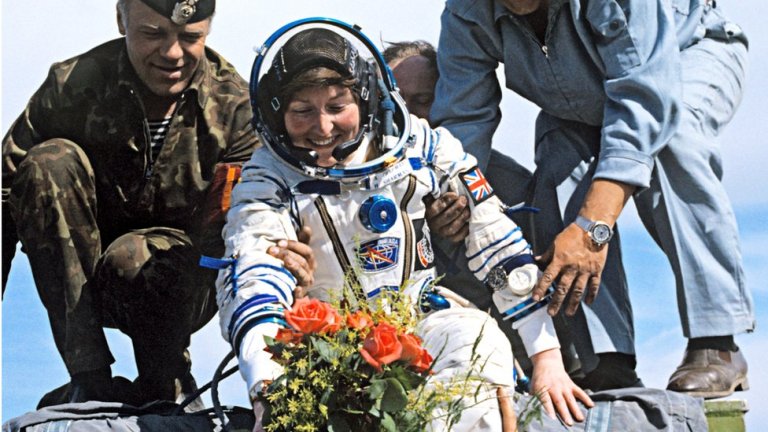
image credit: BBC
There is also an important element of accessibility in Sharman’s story. Her background as a chemist, rather than a pilot or military specialist, highlights the diversity of pathways into space-related work. It reinforces the idea that space exploration is not confined to a narrow set of roles, but encompasses a wide range of disciplines. For the audience, this has a subtle but significant effect. It shifts the perception of space from something distant and unattainable to something that, while still extraordinary, is connected to familiar fields of study and work. It opens the possibility of engagement, not necessarily through direct participation in spaceflight, but through related contributions.
Sharman’s lecture also invites reflection on the role of the United Kingdom in space exploration. While the UK has not historically been a major player in human spaceflight, its contributions to space science, engineering, and research are significant. Institutions, research centres, and educational programmes across the country support a wide range of activities, from satellite development to planetary science. These efforts form part of a broader international network, contributing to missions and projects that extend beyond national boundaries. Public engagement plays a key role in this ecosystem. Events such as the Edinburgh Science Festival provide opportunities for individuals to connect with scientific topics, to hear from those directly involved, and to engage with ideas that might otherwise remain abstract. Sharman’s presence within this context is particularly important. As the first British astronaut, she represents a point of connection between national identity and global exploration. Her work in science communication helps to bridge the gap between professional expertise and public understanding, making complex ideas accessible and relevant. This sense of connection is crucial in fostering engagement. It encourages individuals, not only here at Edinburgh’s Usher Hall, but elsewhere, to see themselves as part of a broader narrative, one that includes not only those who travel into space, but also those who contribute to the knowledge and infrastructure that make such journeys possible.
The themes that emerged from Sharman’s lecture, perspective, collaboration, and hope, are deeply interconnected. Each reinforces the others, creating a framework through which space exploration can be understood not only as a technical endeavour, but as a human one.
Hope, in this context, is not presented as an abstract or passive concept. It is grounded in action, in the willingness to work together, to share knowledge, and to pursue common goals. It is informed by the perspective gained from seeing the Earth as a shared environment, and by the experience of collaboration across boundaries. What is particularly striking is the continuity of these ideas across time. From early missions to current initiatives, the underlying principles remain consistent. The technologies evolve, the scope expands, but the fundamental motivations persist. For the individual, engaging with these ideas involves both reflection and application. It requires consideration on how the perspectives gained from space can inform life on Earth, how the principles of collaboration can be applied in different contexts, and how a sense of shared responsibility can be cultivated. Listening to Sharman, there was a sense that these ideas are not distant or unattainable. They are grounded in real experiences, in practical examples, in the lived reality of those who have worked in space. This grounding lends them credibility, making them more than aspirational statements.
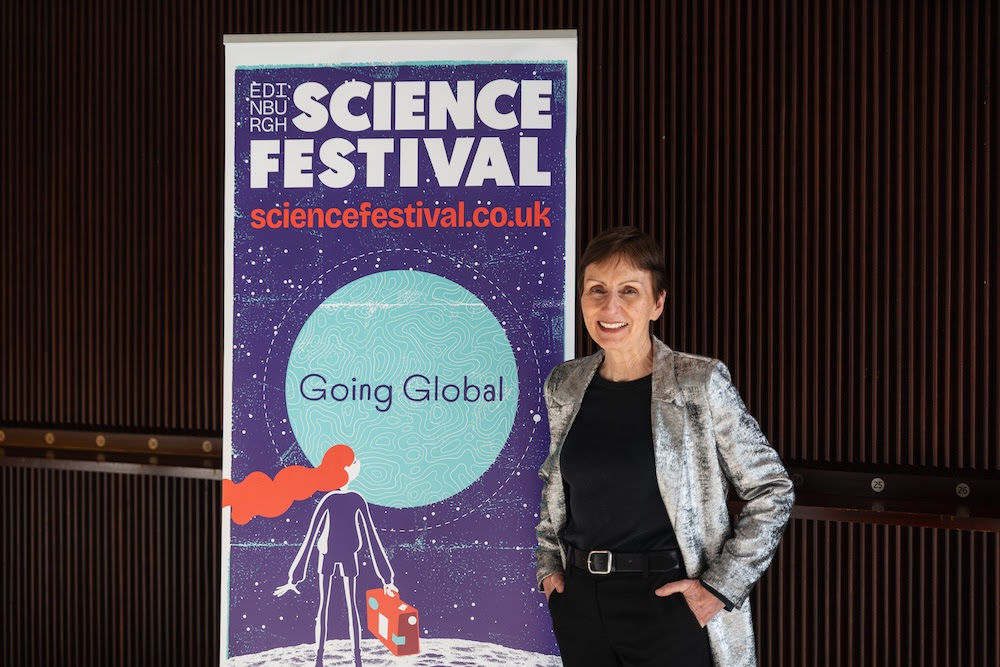
image credit: North Edinburgh News
Leaving the lecture, there was no single defining moment. No dramatic shift in understanding. Instead, there was a gradual realisation that the significance of what had been shared lay not in any one detail, but in the connections it created.
Helen Sharman’s journey to Mir in 1991 remains a landmark in the history of British space exploration. Yet its enduring impact lies in how it continues to shape conversations about science, collaboration, and perspective. Through her work, she extends the reach of that experience, allowing others to engage with its implications. For those who listen, the effect is both immediate and cumulative. It reinforces a sense of curiosity, encourages reflection, and invites a broader understanding of what space exploration represents. It connects individual experience with collective endeavour, linking personal engagement to global narratives. Ultimately, the legacy of such encounters lies in their capacity to change how we see. Not only the vastness of space, but the world beneath it. Not only the achievements of those who travel beyond the Earth, but the shared responsibility of those who remain.
To look up is to imagine what lies beyond. To look down is to understand what it means.
And in that understanding, there is the possibility, not of a single moment of inspiration, but of something quieter, more enduring: a sustained sense of connection, shaped by the knowledge that the story of exploration is not distant, but shared.
Title image credit: Edinburgh Science
 THE ROGUE ASTRONAUT