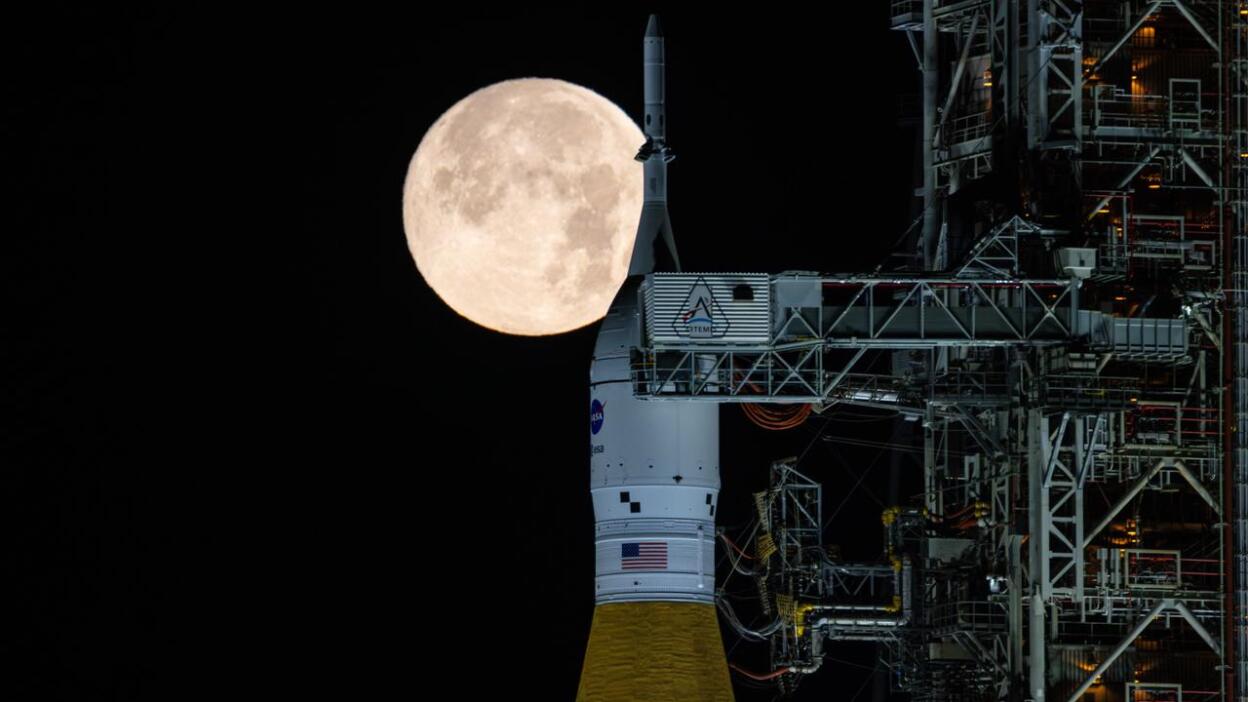
Ok, here goes. There are moments as a parent when you realise that your child’s fascination is not simply observed, but inherited. Not genetically, perhaps, nor consciously taught in the conventional sense, but absorbed through atmosphere, repetition, emotion, and presence. Children notice what captivates us. They learn what shapes our wonder long before they understand its meaning. And sometimes, rather unexpectedly, they make that wonder entirely their own.
It’s 2026, and in the long months, and years, surrounding NASA’s Artemis II mission, the first crewed journey around the Moon since Apollo 17 in 1972, I began to notice something extraordinary in my twelve-year-old son, Munro. Severely autistic (Level 3) with global development delay, Munro experiences the world differently: through pictures, videos, pattern, repetition, sensory familiarity, emotional resonance, hyperfixation and focused interest. Communication, for him, is often less about conversational exchange, it’s often echolalia and more about connection through shared rhythm and repeated experience. Yet when Artemis II launched, something profound occurred. He watched the coverage with complete attention, remaining awake deep into the night to follow the launch itself, the translunar journey, lunar flyby, and splashdown, with the astronauts returning safely to the Earth. Afterwards, he replayed the mission constantly through NASA’s YouTube coverage, revisiting not merely highlights, but entire sequences, launch commentary and countdown, onboard footage, orbital animations, and recovery operations.
And then came the surprise.
Without prompting, Munro began reciting large sections of President John F. Kennedy’s 1962 Rice University speech, his declaration that humanity “choose to go to the Moon”… “not because they are easy, but because they are hard.” He had memorised it almost entirely through repeated exposure, reproducing its cadence, rhythm, and emotional structure with startling precision, recording the launch on his iPad, whilst reciting the speech as an accompanying commentary.
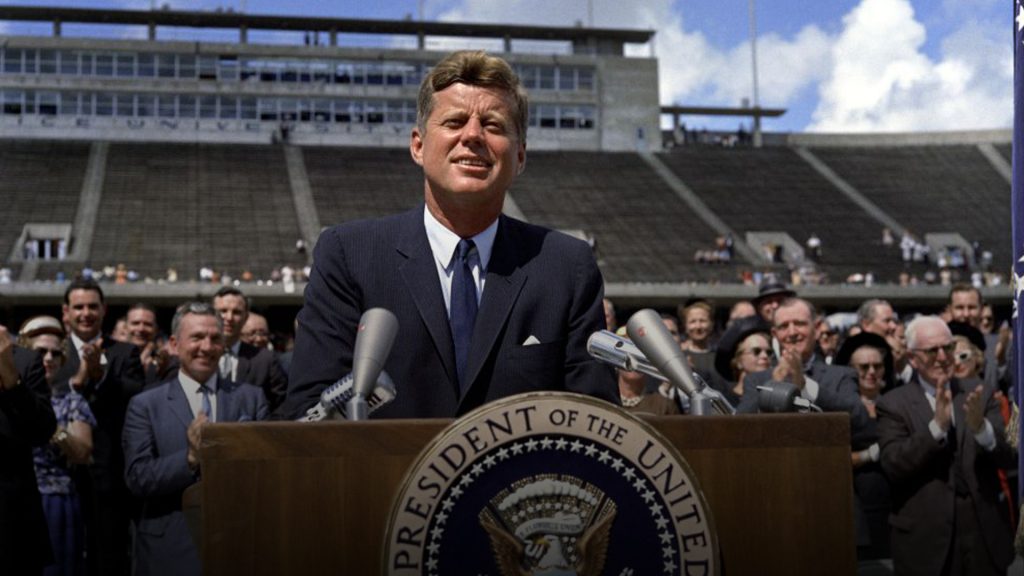
image credit: Space Centre Houston
It would be easy to interpret this simply as an example of neurodiverse fixation (a deep and repetitive attachment to a particular subject). But to reduce it to that alone would miss something essential. What unfolded through Munro’s fascination with Artemis II was not merely obsession, but connection, between history and present experience, between autism and the uniquely structured world of space exploration, and between father and son.
Munro’s profound engagement with Artemis II demonstrated to me how space exploration possesses qualities that resonate deeply with neurodiverse cognition and emotional processing. Through structure, repetition, preparation, predictability, sensory immersion, and emotional sincerity, the narrative of human spaceflight can become uniquely accessible and meaningful to autistic individuals. At the same time, this fascination reveals the intergenerational transmission of wonder: the subtle ways children absorb the passions of those around them and transform them into their own systems of meaning. By examining neurodiversity as a whole; memory, repetition, emotional resonance, and the symbolic power of space exploration, NASA’s Artemis II mission became not merely a spectacle to observe, but a shared emotional landscape through which connection itself became possible.
The Artemis II mission represented more than a technical milestone. It marked the return of human beings to deep space for the first time in more than half a century. Since the conclusion of Apollo in 1972, human spaceflight had remained confined largely to low Earth orbit, operating roughly 250-500 miles (480-800 km) above Earth. The Moon found its place in memory rather than destination, and an achievement fixed in history rather than an active frontier.
Artemis II changed this.
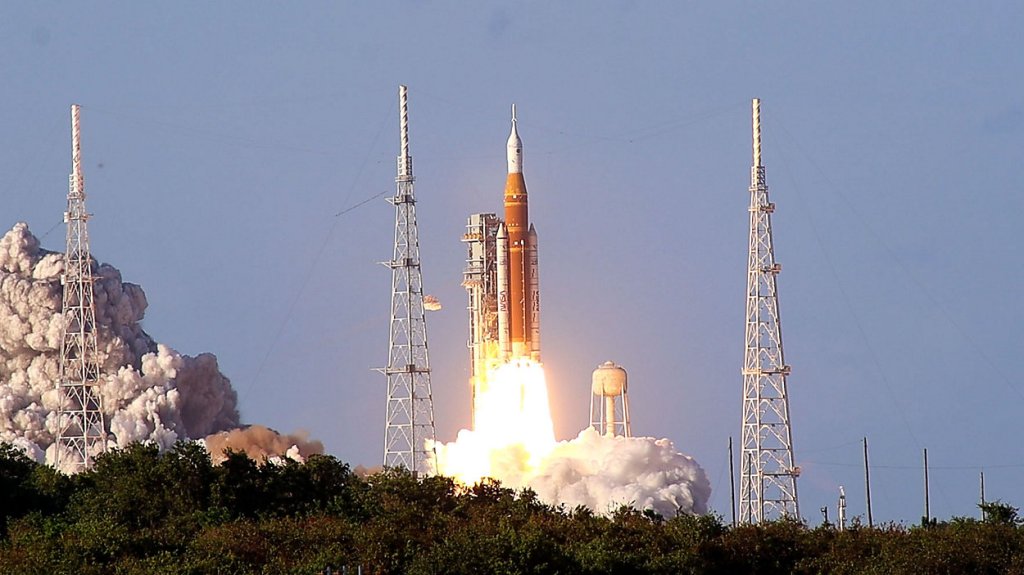
image credit: Spectrum News/Anthony Leone
For adults who grew up during, or in the shadow of Apollo, the Artemis II mission carried a particular emotional significance. It reawakened dormant cultural memories of exploration, risk, ambition, collective imagination, and unified celebration. The launch itself became an event experienced not only scientifically, but emotionally, a reconnection to narratives many believed had been left behind. For Munro, however, Artemis II was not nostalgic. It was immediate.
The structure of the mission itself may help explain its impact. Spaceflight itself possesses a rare narrative clarity: launch, journey, return. Unlike the fragmented and chaotic nature of other media Munro watches on varying devices, a space mission unfolds according to comprehensible stages. It is procedural, ordered, and highly ritualised. Countdown clocks progress predictably. Communications follow repeated formats. Visual imagery remains consistent. Mission milestones are clearly defined. For neurodiverse individuals, particularly those drawn toward routine and predictability, this structure can be deeply comforting. Artemis II provided Munro not with a random stimulation, but ordered progression. Every stage connected logically to the next.
Moreover, the mission offered emotional intensity without social ambiguity. Human interaction aboard spacecraft is purposeful, calm, and highly regulated. Astronauts communicate clearly. Emotional expression, when present, is sincere and direct rather than socially coded or ironic. It is singular to one person at a time, often with a delay or break between say Mission Control in Houston, and the Command Module in space. In many ways, the environment of spaceflight removes the unpredictable social noise that often complicates everyday communication. This may partly explain why Munro remained so absorbed by the mission. Artemis II was not chaotic. It was understandable.
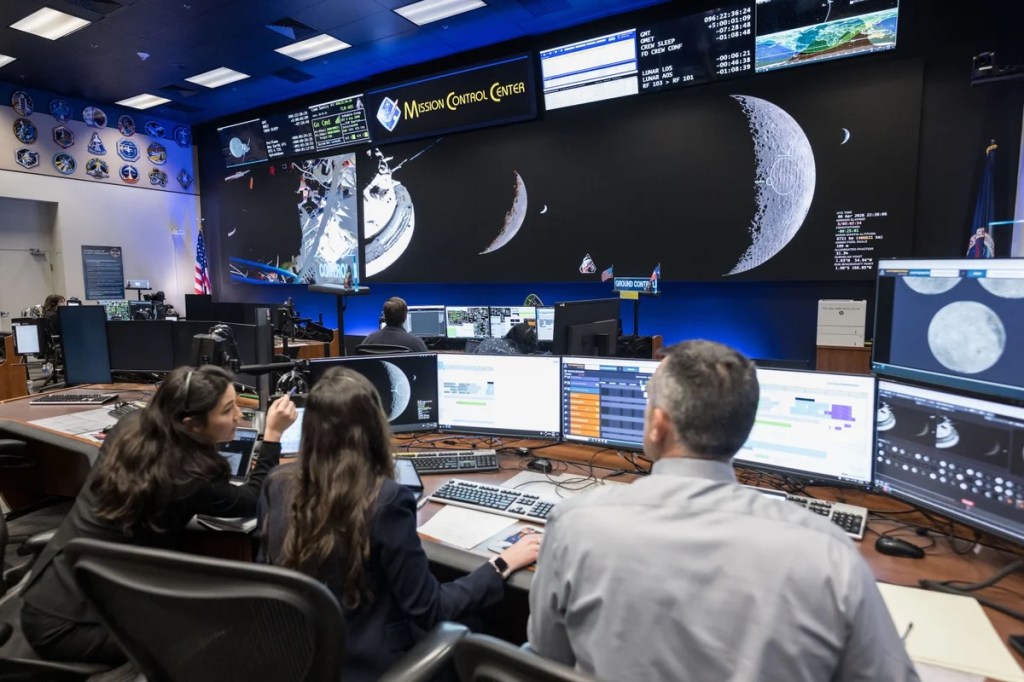
image credit: NASA
One of the defining features of Munro’s engagement with Artemis II was its repetition. He did not merely watch the mission once. He replayed it continuously, and still does. To an outside observer, this might appear excessive or unusual. Yet within the neurodiverse spectrum, repetition often serves profound cognitive and emotional functions. Repetition creates predictability. Predictability reduces uncertainty. And uncertainty, for many autistic individuals, can be deeply distressing. In Munro’s case, highly anxiety inducing.
By replaying the mission repeatedly, Munro transformed an enormous, and emotionally intense event into something stable and manageable. Each viewing reinforced familiarity. The known became reassuring, and frankly comforting. Yet repetition within neurodiversity is not merely about control. It is also about depth. Attention often operates differently from neurotypical attention. Rather than scanning broadly across many subjects, it can focus intensely on specific systems, narratives, or structures. Through repetition, details emerge that others overlook. Patterns are identified and become meaningful. Emotional attachment deepens.
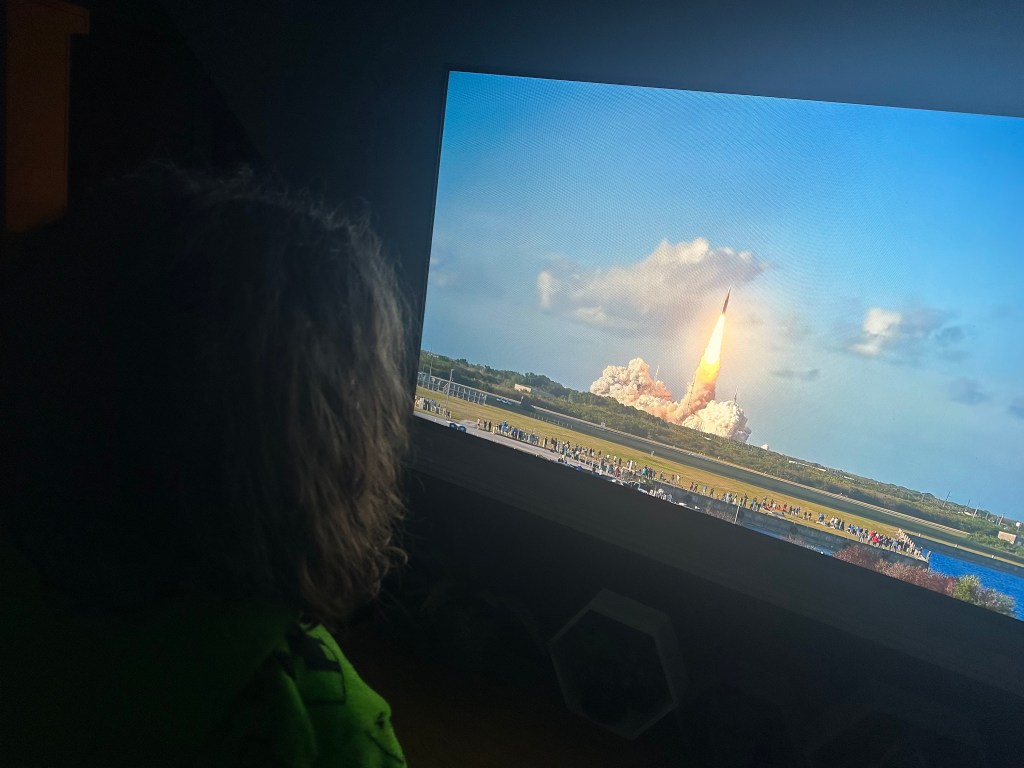
image credit: The Rogue Astronaut
NASA broadcasts themselves are particularly suited to this kind of engagement. Their language is precise. Their procedures are repeated. Their work ethic is patient, and their visual identity has remained consistent across decades. Countdown terminology, mission patches, call signs, communications protocols, astronauts and all that it in itself encompasses, spacesuits, training, and flight attire, all form part of a highly ordered symbolic world. For Munro, Artemis II became not simply an event, but an environment.
For Munro, this structured repetition extended beyond visual media and into language itself. Kennedy’s Rice University speech, memorised almost entirely, demonstrates the relationship between his autism and rhythmic and verbal structure. JFK’s speech possesses extraordinary cadence: deliberate pacing, repeated phrases, rising emotional momentum, and pauses for applause. Its rhetoric functions almost musically. Autistic memory frequently responds powerfully to rhythm and repetition. What may seem remarkable to others, the memorisation of lengthy speeches, is often facilitated by the patterned architecture of language itself.
But beyond memory lies meaning. Kennedy’s speech is not merely procedural. It is aspirational. It frames exploration as purposeful, difficult, and collective. That Munro gravitated toward it suggests not only cognitive fascination, but emotional resonance. There are particular qualities within space exploration as a whole that appear uniquely compatible with Munro’s modes of thinking and engagement.
First is systems thinking. Spaceflight is built entirely upon systems: engineering and mechanical systems, navigational systems, communication systems, environmental systems. Every component interacts logically with others. Cause and effect remain clear. Procedures matter. Precision matters. For neurodiverse individuals, systems often provide clarity absent from human social interaction. Machines behave consistently. Physical laws remain stable. Outcomes follow identifiable patterns.
Second is sensory immersion without overload. Rocket launches are visually spectacular, yet controlled, and are often broadcast in their entirety from liftoff until the rocket reaches space roughly eight or nine minutes later. Mission graphics, telemetry displays, onboard cameras, and communications create rich sensory experiences organised within highly structured frameworks. Unlike many modern media environments, space coverage does not rely heavily on rapid editing, chaotic sound design, or emotional unpredictability.
Third is emotional sincerity. One of the striking qualities of NASA broadcasts is their absence of irony. Modern culture often communicates through layers of detachment, sarcasm, outside influence, or ambiguity. Space exploration does not. Its emotional register remains earnest. Astronauts speak directly about fear, hope, teamwork, exploration, and discovery. For autistic individuals, who may struggle interpreting layered social subtext, this sincerity can be deeply accessible.
Finally, there is the question of scale. Autistic cognition frequently involves intense fascination with subjects that transcend ordinary boundaries: astronomy, transport systems, mathematics, geography, history to name a few. Space exploration combines all these elements into a single coherent narrative. If its not to bold to suggest; It offers infinity organised through structure. The cosmos is vast and unknown, but spacecraft are precise. Children absorb more than instruction. They absorb atmosphere.
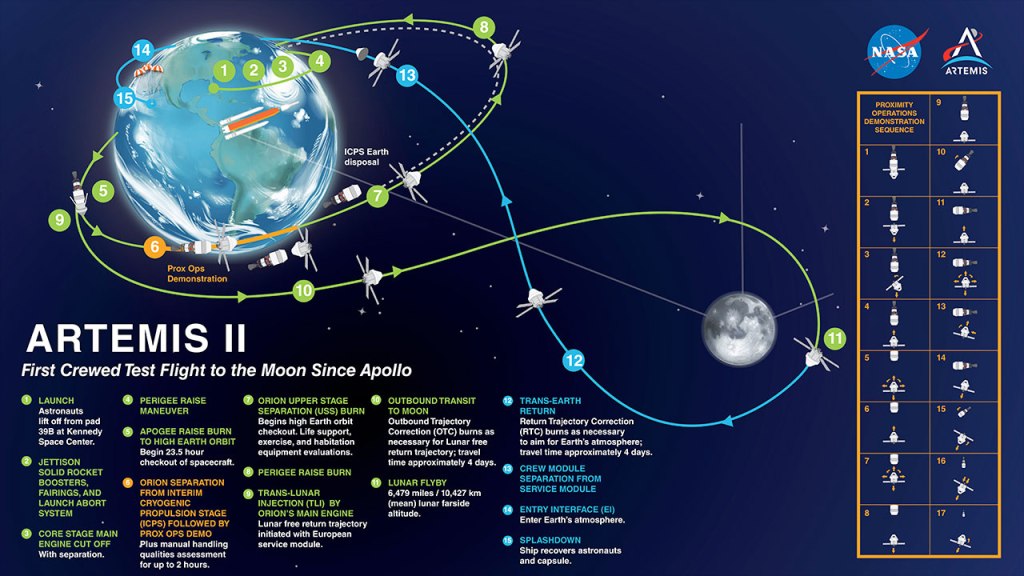
image credit: NASA
It is worth noting that Munro’s connection to space exploration has not existed solely through screens, broadcasts, or repeated viewings of launches online. By the age of twelve, he had already visited Florida and Kennedy Space Center from the UK four separate times. Over the years, these journeys became something far greater than holidays. They formed part of the emotional landscape of his childhood: familiar roads along the Space Coast, the immense silhouette of the Vehicle Assembly Building (VAB) appearing on the horizon, the numerous launch pads standing against the skyline, even arriving there with the soundtrack of the 1995 Ron Howard film, Apollo 13 playing loudly in the car (something I take full responsibility for). For many children, such places might feel overwhelming or abstract. For Munro, they seemed to carry a rare sense openness in the environment, of focus and calm. The routines of visiting, the recognisable environments, the repeated return to a place associated with wonder and familiarity, all appear to resonate deeply with him.
One moment in particular remains unforgettable. On the afternoon of January 31st, 2018, Munro stood on Playalinda Beach in Titusville Florida, with myself, and my parent’s who had accompanied us on our visit, and witnessed the launch of SpaceX’s GovSat-1 mission from nearby Cape Canaveral. From barely three miles away, the nine Merlin 1D+ engines of the Falcon 9 ignited. The sound did not arrive immediately. First came the sight of the rocket climbing impossibly slow at first. Then, seconds later, the physical force of the engines rolled across the beach, shaking the air and ground simultaneously. For many people, a rocket launch is something watched. From that distance, it becomes something felt.
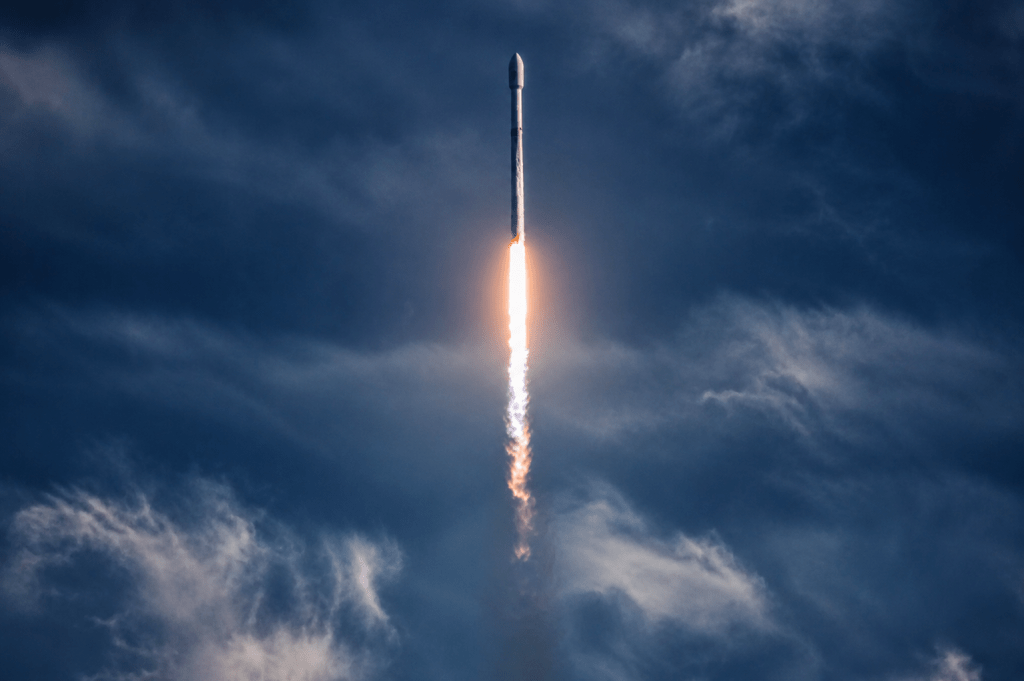
image credit: The Rogue Astronaut
There was also a quiet historical symmetry to that day. Six hours short of exactly sixty years earlier, in 1958 from 8.2 miles (13.1 km) south of SLC-40, from the same stretch of Florida coastline, America had launched LC-26A that saw a Juno I booster thunder into the night and deliver Explorer 1, the nation’s first satellite, beginning America’s journey into the Space Age.
What stays with me is not simply the overwhelming, and transformative sensory experience of the launch itself, but Munro’s reaction to it. There was no need for explanation, no reasoning, no need for words. The experience seemed to settle deeply within him, becoming part of the same emotional and sensory connection that now draws him repeatedly toward Artemis II and the wider story of human spaceflight. Looking back, it feels significant that one of his earliest direct encounters with space exploration was not quiet or distant, but visceral. Light, sound, vibration, and awe experienced together beneath the open sky. In many ways, that afternoon on Playalinda Beach feels less like an isolated memory and more like the beginning of a lifelong connection: not only to rockets or missions, but to the feeling of wonder itself.
Long before Munro could fully articulate his fascination with Artemis II, he had already spent years immersed in an environment shaped by space exploration. Books, documentaries, conversations (sometimes with astronauts themselves, at only five-months-old his first was Apollo 12 Lunar Module Pilot Alan Bean), museum visits, late-night launches watched together, and my astronaut autograph wall in my study, these formed part of the emotional architecture of daily life. Even his middle name, Lovell, reflects this inheritance. Named after Gemini 7, 12, and Apollo 8, and Apollo 13 astronaut Jim Lovell, Munro carries within his identity a connection to human spaceflight. Yet inheritance is not imitation. Children do not simply replicate parental interests. They reinterpret them through their own emotional and cognitive frameworks. Munro’s engagement with Artemis II therefore became something uniquely his own.
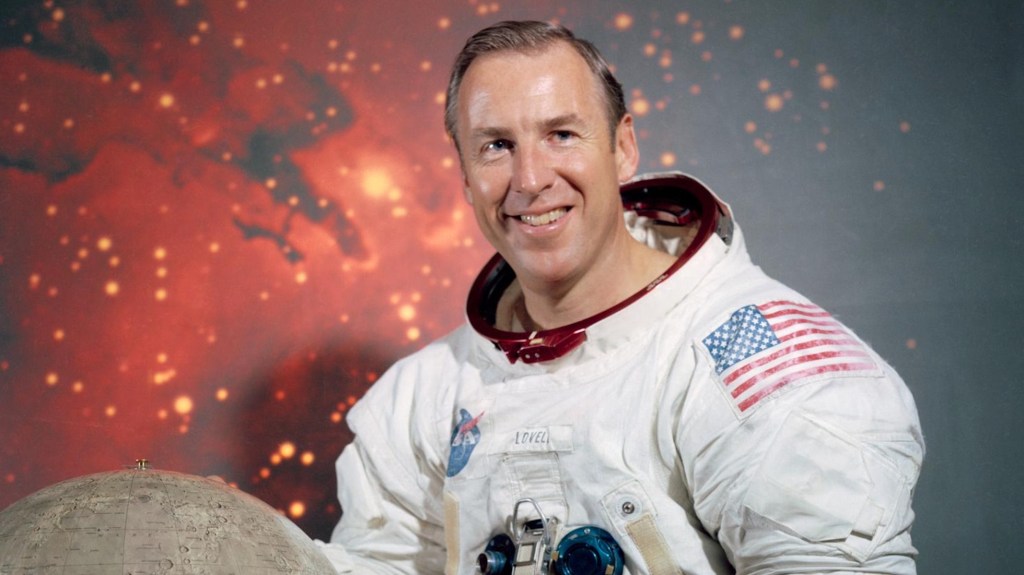
image credit: NASA
Two years almost to the day after meeting Apollo 12 Lunar Module Pilot Alan Bean, after Months of meeting with a multidisciplany team of specialists Munro was diagnosed autistic with global developmental delay. When you first receive a diagnosis of autism for your child, there is a grief that many parents are afraid to speak aloud. Not grief for the child themselves, because the love remains immediate, fierce, and unconditional, but grief for the imagined child you had unconsciously constructed over a lifetime of expectation. The child shaped by every assumption absorbed from society, family, education, and your own experiences growing up. You mourn futures you had quietly pictured without even realising it: conversations you thought you would have, milestones you expected to arrive naturally, a version of parenthood you believed you understood. And then, almost immediately, comes guilt for feeling that grief at all. Guilt because your child is still there, still beautiful, still deserving of complete acceptance exactly as they are. The conflict between those emotions can feel overwhelming, love existing alongside sadness, gratitude alongside fear.
But over time, something begins to shift. You realise the grief was never truly about losing your child, because your child was never lost. It was about letting go of certainty. Letting go of the narrow framework through which the world teaches us to measure happiness, success, communication, and connection. Autism forces you to relearn parenthood entirely. Progress is no longer defined by comparison to others, but by understanding your child on their own terms. Its progress not perfection. And within that process, moments that might appear small to outsiders become extraordinary: a shared interest, a spontaneous gesture of affection, a new phrase spoken independently, a hand reaching for yours. These moments carry immense emotional weight because they are hard-won, deeply sincere, and entirely real. In time, the grief gives way not to resignation, but to awe, to the gradual understanding that your child’s world is not lesser or empty, its only different. And when they finally let you into that world, even briefly, it can feel more beautiful than anything you originally imagined.
There is also a quieter reality to parenting an autistic child that often remains unseen. Over time, you become far more than simply a parent. You become an advocate, interpreter, protector, and a constant source of stability within a world that can sometimes feel confusing or overwhelming for your child. There are meetings where your son is reduced to assessments and deficits rather than understood as a whole person. There are moments when systems that were supposed to help have failed, and instead leave you exhausted, emotional and disheartened. Yet somehow, after allowing yourself only the briefest moment to gather your thoughts, you continue. Not because it is easy, but because your child needs you to.
Autism teaches you to listen differently. You learn to understand forms of communication that exist beyond words: a glance, a gesture, a change in routine, what the atmosphere of a room would do to them before they can tell us. Over time, you become fluent in a language that no textbook can adequately explain. And while there are nights when the future feels uncertain and the weight of responsibility settles heavily in the quiet, I have come to realise that the depth of those fears is simply another reflection of love itself. We did not choose this path, but every day we choose our children completely and without condition.
What fascinates me most, as a proud father, is not merely that Munro loves space exploration, but its how he experiences it. His engagement lacks cynicism entirely. There is no cultural distance, no ironic detachment, no evidence of political influence or budgetary constraint. He encounters Artemis II with complete sincerity. In this sense, autism may preserve certain forms of wonder that adulthood often suppresses.
Neurotypical adulthood frequently fragments attention. Wonder becomes secondary to practicality. Repetition becomes boredom rather than comfort. Yet Munro’s sustained engagement reveals another possibility: that fascination itself can become a form of emotional grounding. Watching him experience Artemis II also reshaped my own relationship to the mission. Through him, familiar imagery regained emotional intensity. The launch was no longer simply historic; it became immediate again.
There is a quiet moment familiar to many parents of children who are on the autistic spectrum, one that rarely appears dramatic from the outside. A small hand reaches for yours. Not automatically, not casually, but deliberately. And in that gesture there is trust, invitation, and connection all at once. People often speak about their children’s place on the autism spectrum as though it creates distance, as though autistic children exist behind some invisible barrier that parents spend years trying to bridge. But moments like these reveal something very different, to me anyway. They are not shutting the world out; rather, they are carefully deciding who to let in.
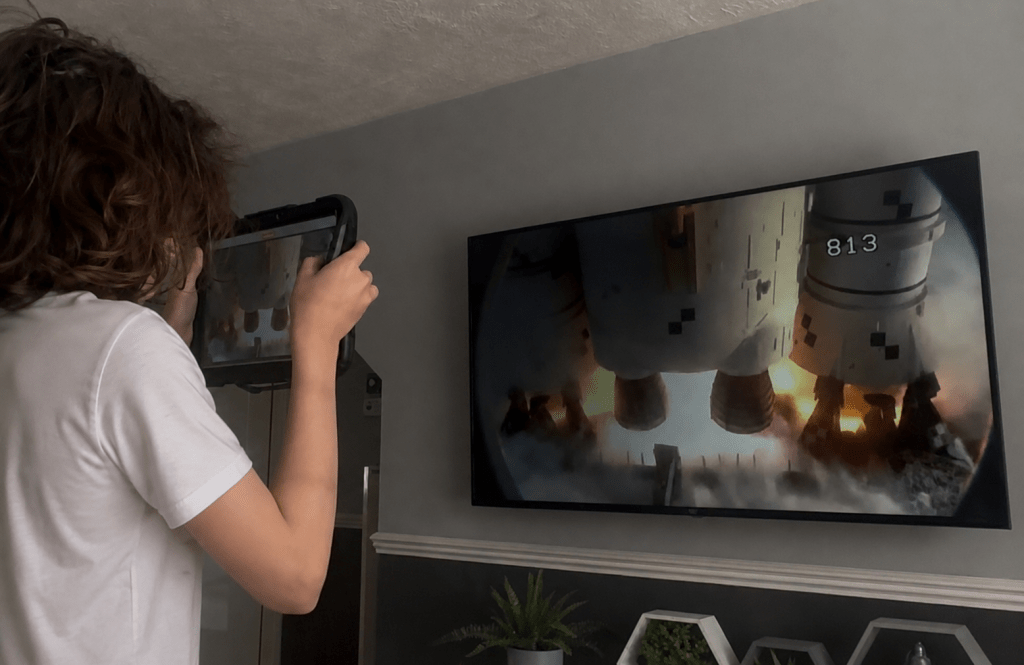
image credit: The Rogue Astronaut
When Munro takes my hand to sit beside me and watch Artemis II, or when he looks toward me while replaying Kennedy’s words about going to the Moon, it feels less like observation, or echolalia, and more like entry into his world. A world shaped by repetition, focus, emotion, sensory detail, and sincerity. And it is beautiful precisely because it is shared so sparingly and so honestly. There is no pretence or agenda within it. No performance. Just connection in its purest form.
As a parent, those moments carry enormous emotional weight. They remind you that love is not always expressed in conventional ways. Sometimes it arrives through shared silence, through watching the same launch footage for the tenth going on fiftieth time, through hearing the familiar dialogue echo through the house late at night, and having the patience to sit back, watch, and let the moment flow naturally. Sometimes connection is not spoken outright, but experienced side by side, looking together toward something that inspires wonder. And perhaps that is why these moments stay with us so powerfully. Because when an autistic child lets you into their world, even briefly, you realise it was never empty or distant at all. It is rich with feeling, with curiosity, with patterns and meaning and beauty. You simply have to learn how to see it.
Parents often imagine themselves teaching their children. Yet sometimes it occurs in reverse. Children remind adults how to feel awe (I saw this personally when I solely watched Munro’s face during the evening firework display at Disney’s Magic Kingdom). The Moon occupies a unique position within our understanding of wonder. It is both distant and familiar, and at a different angle, scientific and symbolic. For Munro, the lunar flyby appeared particularly significant. He replayed these sequences repeatedly: the spacecraft emerging from behind the Moon, the Earth suspended in darkness, mission control communications describing orbital trajectories, followed by the iconic Earthrise. Perhaps the Moon’s power lies partly in its constancy. I’ve written about it before; Unlike space itself, the Moon exists visibly within everyday life. It is reachable by imagination, the wonder of where it is, could I go, and when, and how. Autistic attachment often forms strongly around stable, recurring presences. The Moon, with its predictable cycles and enduring visibility, becomes not merely celestial, but relational.
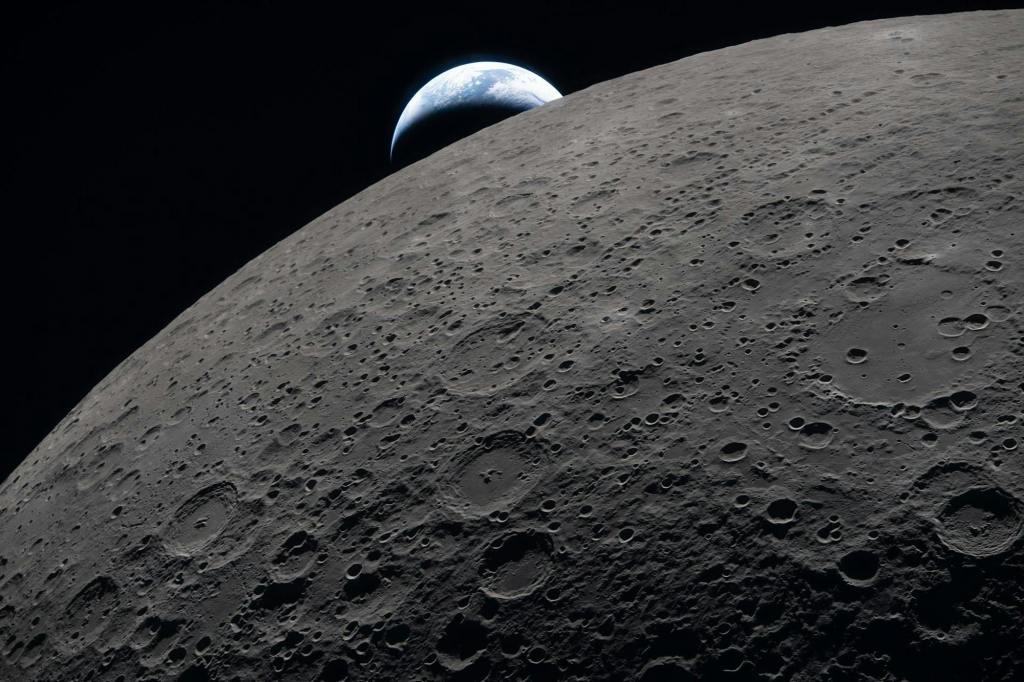
image credit: NASA
The Artemis programme itself reinforces this emotional accessibility. Unlike earlier eras of space exploration dominated by a ‘space race’ of geopolitical rivalry, Artemis emphasises continuity, sustainability, and international cooperation. The mission narrative is framed not as conquest, but return. This framing matters. The Moon becomes less a trophy and more a destination connected to human continuity. Its emotional symbolism shifts from victory to belonging. Munro’s fascination with Artemis II reveals something broader about the relationship between autism and structured cultural narratives, namely of ambition.
Autistic engagement is often misunderstood as emotional detachment because it may manifest through repetition, intense focus, or specialised interests. Yet beneath these behaviours frequently lies a profound emotional investment. Artemis II provided Munro with more than entertainment. It offered coherence. In a world that can often feel socially unpredictable and sensorily overwhelming, the mission created a stable emotional framework: ordered, purposeful, comprehensible, and sincere. Moreover, the mission connected him not only to spaceflight, but to shared human aspiration. Kennedy’s speech resonated because it articulates collective purpose through structured language. NASA broadcasts resonated because they frame exploration as collaborative rather than chaotic.
This suggests something important about accessibility within science communication as a whole. Munro’s engagement may flourish not when information is simplified, but when it is structured clearly, communicated sincerely, and presented within coherent systems. Space exploration naturally embodies these qualities. At the same time, Munro’s fascination demonstrates how deeply parental passion shapes childhood experience. Wonder is contagious. Interests become emotional inheritances long before they become intellectual ones. Yet perhaps the most moving aspect of this experience is what it reveals about connection itself.
Communication between autistic children and parents does not always occur through conventional conversation. Sometimes it occurs through shared attention: watching together, replaying together, listening together, through patience. The Artemis II mission became such a space. Not merely a mission observed from afar, but a shared emotional language. Late at night, long after most of the world had gone to sleep, including his mum and younger brother, Munro remained transfixed by humanity’s return to deep space. He watched countdowns unfold with complete concentration. He listened to astronauts speaking calmly across hundreds of thousands of miles. He replayed the lunar flyby repeatedly, absorbing every detail. He still does. And somewhere within the cadence of Kennedy’s words, spoken more than sixty years earlier, he found reason for memorising it completely.
To outsiders, this may appear unusual. Yet viewed more closely, it reveals something profoundly human. Again, space exploration offers structure, sincerity, repetition, purpose, and wonder. These qualities resonate deeply within Munro’s experiences in the world, providing not an escape from reality, but connection to it. For me as his father, watching this fascination emerge carried its own emotional weight. It revealed the invisible transmission of passion across generations: how wonder moves quietly through us as a family, embedding itself within memory, ritual, and shared experience.
But it also reminded me of something else. That fascination is never merely about rockets or spacecraft or distant worlds. At its deepest level, space exploration itself reflects a desire to connect, to each other, to meaning, to something larger than ourselves. And perhaps that is why Munro watches Artemis II over and over again. Not because it is repetitive. But because, within its ordered rhythms and distant horizons, he has found something stable, beautiful, and profoundly real.
What moves me most is not simply Munro’s fascination with Artemis II, but what it represents emotionally. Autism can so often feel like standing at the edge of another world, close enough to see glimpses of it, but never fully able to enter. There are difficult days. Days shaped by anxiety, dysregulation, meltdowns, exhaustion, repetition, and the quiet emotional weight that families of autistic children carry, often invisibly. Progress is rarely linear. It comes in fragments, in small victories almost imperceptible to others. With the autistic spectrum, again it is progress, not perfection. And yet those fragments matter more than words can adequately express.
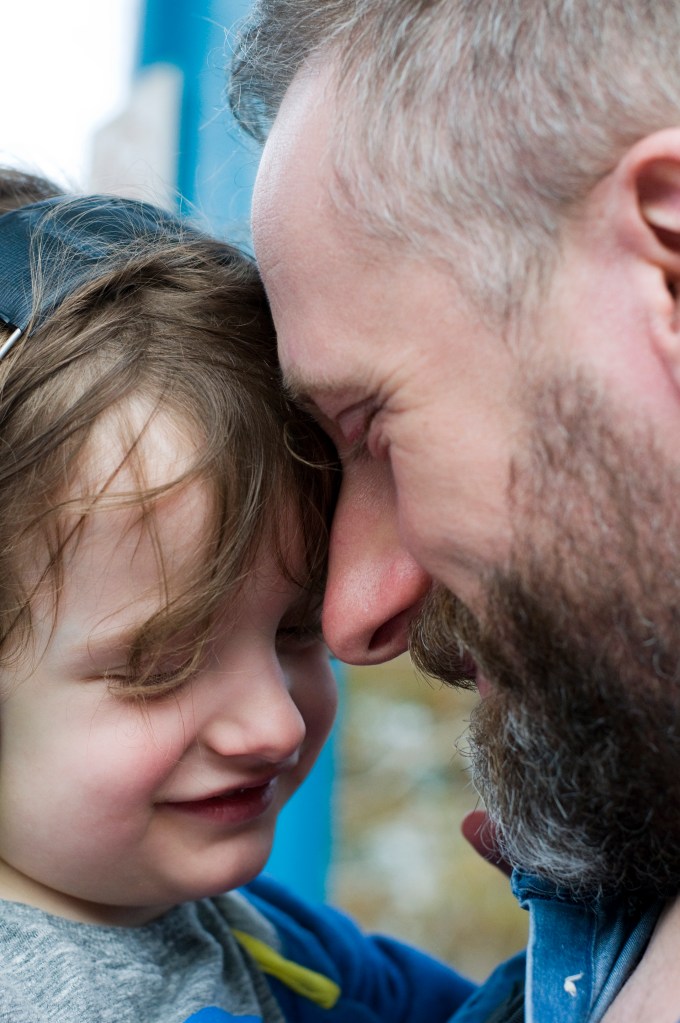
image credit: Kate Davies
When Munro lets me into his world, even briefly, it feels extraordinary. Watching him sit late into the night following Artemis II with such intensity and focus; hearing him unexpectedly recite Kennedy’s Moon speech from memory; seeing the joy and calm that space exploration brings him, even starting to sit quietly, contently and draw with pencil on paper, these moments affect me far more deeply than I can easily articulate. There are times it genuinely brings tears to my eyes. Not because I expect him to become an astronaut, scientist, or engineer, but because within these moments I see connection. I see emotional engagement. I see wonder. And above all, I see him sharing something meaningful with me.
There is an overwhelming sense of pride in witnessing his development, not measured against conventional expectations, but understood entirely on his own terms. Autism changes the scale by which progress is understood. Things that others may consider small, typical, and what they often take for granted, can feel immense: a moment of shared attention, a new phrase spoken independently, sustained emotional focus, eye contact, the desire to connect through a common interest. These are not insignificant moments. They are profound.
And perhaps, that is why Artemis II has meant so much to both of us. Because somewhere within the rhythm of countdowns, the distant illumination of the Moon, and the calm voices transmitting from deep space, Munro found something that resonated with him completely. And through that fascination, through him choosing to let me in, I was allowed to glimpse the beauty of how he experiences the world, not as something broken or incomplete, but as something deeply sincere, intensely focused, and full of awe and wonder.
In those moments, space exploration becomes something far greater than technology or exploration alone. It becomes a bridge. A shared language. A quiet place where father and son meet together beneath the same distant stars.
title image credit: NASA/Sam Lott
With thanks:
This article would likely never have been written without the initial encouragement to do so of my wife, and Mum to both Munro and his younger brother, Cal. For a long time, I think I carried these thoughts and emotions quietly, perhaps because they felt too personal, too close, or too difficult to fully articulate. It is one thing to write about rockets, history, meeting astronauts and space exploration; it is another entirely to write honestly about your child, your fears, your pride, and the deeply emotional reality of autism and parenthood. I became so overwhelmed by the feeling of watching Munro connect so profoundly with Artemis II, watching him stay awake into the early hours, hearing Kennedy’s words emerge unexpectedly from memory, witnessing the joy and calm space exploration brings him, that I do not think I could properly step back and see the significance of it all for myself.
She could. And she suggested I write this.
In many ways, the balance of our family life has required difficult decisions, compromises, and quiet sacrifices that often remain unseen from the outside. With Munro’s Mum working full time, much of the responsibility for maintaining stability has naturally fallen to me, not simply as a parent, but as Munro’s primary bond, care giver, his sense of safety and reassurance, the person he instinctively turns toward and trusts completely. Autism shapes the rhythm of family life in ways difficult to fully explain unless lived directly. Plans can change suddenly. Anxieties can emerge without warning. Routine and familiarity become essential forms of security. And so I have willingly shaped much of my own life around being present for both Munro and Cal whenever they need me, particularly in moments of uncertainty or emergency, because that presence matters profoundly within a neurodiverse family. Frankly, tolerance for events in the world outside of my family is at zero, and you feel you are constantly running at 100%, 100% of the time.
Perhaps that is also why writing this article as part of ‘The Rogue Astronaut’ website felt so emotionally exposing. These experiences are not abstract observations to me; they are woven into everyday life, into fatherhood itself. Yet my wife recognised that these moments mattered, not only as memories for our family, but as something worth sharing honestly with others. She encouraged me to write through the emotion, rather than away from it. For that, and for the endless patience, strength, understanding, and unconditional love she gives both our boys every single day, I remain more grateful than words can ever properly express. Thank you Kate.

